jueves, 26 de febrero de 2015

Le posate, la pasta e le forchette

Cucchiaio, forchetta e coltello, sono strumenti divenuti ormai quotidiani per noi, degli amici con cui condividere i nostri pasti. Sono utensili di cui il galateo parla estesamente, e di cui esiste addirittura un linguaggio non verbale di comunicazione ai camerieri.

Ecco alcuni segnali per indicare quel che volete dire:


1) Se le posate sono in posizione parallela orizzontale, significa: Complimentoni! Il piatto era davvero buono, sei dentro la cucina di Masterchef!

2) Due posate che formano un angolo acuto significa che, nonostante il piatto vi piaccia un sacco, non riuscite ad andare avanti...per il momento! Facciamo una piccola pausa, e poi torneremo famelici come prima!

3) Ahi ahi! Quando due posate si trovano ad angolo acuto l'una rispetto all'altro ma con la lama del coltello tra i rebbi della forchetta...tremate! Potreste perdere la vostra terza stella Michelin! Questo segnale, infatti, da usare con parsimonia, significa che non abbiamo capito il piatto, che non è realizzato bene o che semplicemente non ci piace. Amen, amici come prima!

4) Due posate in posizione perpendicolare l'una rispetto all'altra con la forchetta in posizione verticale e il coltello in posizione orizzontale significa che diamo il via libera al cameriere a portarci altra pappa. Possiamo usare questa posizione delle forchette anche dopo la posizione 2, ad indicare che adesso siamo pronti a riprendere la nostra sfida corpo a corpo con il cibo!

5) Posizione universale, due posate disposte in maniera parallela e verticale significa che siamo pieni, abbiamo finito il nostro pasto. Portate pure il conto agli amici che sono con noi, pagheranno loro infatti ehehe!

Fin qui abbiamo visto l'utilizzo delle posate oggi, ma qual è la loro storia?

La storia della forchetta e degli spaghetti.

Se il cucchiaio e il coltello ricalcano esattamente le forme per cui sono nate, per la forchetta la storia è andata un po' diversamente. Pensateci, il coltello ed il cucchiaio sono presenti in tutte le culture, mentre la forchetta no: ad esempio in molti paesi orientali si utilizzano i bastoncini.
La forchetta è una invenzione romana,  ma anche questo strumento venne dimenticato ai tempi della caduta dell'impero. Rimasero invece in utilizzo nell'Impero Romano d'Oriente, cioè a Costantinopoli, oggi Istanbul, e da lì le forchette vennero reintrodotte in Europa occidentale dopo l'anno Mille attraverso la "porta d'Oriente": Venezia.


"I maccheronari", la primissima foto di Streetfood della storia. Immagine di Carlo Brogi (1850-1912) 

Si narra che dapprima le forchette vennero fortemente criticate da parte della Chiesa, tale strumento infatti era troppo simile al forcone, simbolo demoniaco! Dalla Serenissima poi le forchette vennero reintrodotte in tutta Europa. Nel XIV secolo, nel Regno di Napoli, si consigliava l'utilizzo di un punteruolo di legno per potere più comodamente mangiare un tipo di piatto appena inventato: la pasta! Dalla corte fiorentina, attraverso Caterina de' Medici, le forchette arrivarono dapprima in Francia e poi nel resto d'Europa. Carlo V ne aveva addirittura una collezione, mentre si vocifera che Luigi XIV, il Re Sole, nonostante ne avesse una vasta collezione,  non tollerasse l'utilizzo delle posate: preferiva le mani, ce lo immaginiamo come Obelix!


"miseria e nobiltà" del grandissimo Totò. Qui si vede il modo
tradizionale di mangiare la pasta all'inizio del 1800.

Nei conventi, pensate un po', la forchetta era addirittura bandita, e lo è stata almeno fino all'anno 1700!

Ma bisogna aspettare l'inizio del 1800 per assistere alla nascita della forchetta moderna, con quattro rebbi. Già, perchè proprio quattro? La risposta sta negli spaghetti! Ehi, tranquilli, non siamo diventati Pastafariani, anche se ne apprezziamo moltissimo il messaggio ironico.


La risposta a tutto non è 42, ma si trova negli Spaghetti!

Dicevamo che il motivo dei quattro rebbi delle forchette sta negli spaghetti. Si dice infatti che Ferdinando II di Napoli, andasse ghiotto per la specialità napoletana per eccellenza: gli spaghetti. In quel tempo, però, gli spaghetti si consumavano con le mani, e mancava dunque un utensile idoneo per presentare questa delizia nei pasti ufficiali. La forchetta a tre rebbi, infatti, è inutilizzabile per arrotolare questa delizia: provateci anche voi a casa, non si riesce proprio!


Il luogo del delitto, la gigantesca reggia di Caserta.
Il re Ferdinando di Borbone, dalla reggia di Caserta, diede allora l'incarico a un tale Gennaro Spadaccini di inventarsi qualcosa. Il buon Gennaro tornò con la soluzione: una forchetta con quattro rebbi più corti, perfetta per potere arrotolare i regali spaghetti di sua Maestà. L'invenzione corse rapidissima in tutte le corti d'Europa, e venne in seguito anche anche adottata dalle classi sociali più povere.

Ebbene, ogni volta che la utilizzate ringraziate Gennaro Spadaccini e quel ghiottone di Re Ferdinando! E' grazie a loro che la forchetta è così com'è!

Image and video hosting by TinyPic

Of forks and pasta, history of the cutlery

Spoon, fork and knife are everyday tools in our homes. Etiquette talks about it extensely, and there is an universal language too, in order to communicate with the waiters what you want to tell them! You don't believe it? Read it down below! That's pretty interesting huh?


1) If the fork and the knife are disposed in a parallel, horizontal position they means that the dish is really great! We enjoyed it a lot! You're a Masterchef!

2) If the fork and knife are forming a sharp angle it means that, even if you're enjoying the dish, you just can't go on eating, you need a pause...for the moment! We'll be back devorating the dish soon, we promise!

3) Ouch! When the knife is forming a sharp angle with the fork but the knife in between the fork's tines...start fearing for the worse! You could be bound to lose your third Michelin star! This means infact that the dish is not good enough, they're not enjoying it at all!

4) If the fork and the knife are perpendicular to each other with the fork being vertical and the knife horizontal, well, that means that the the waiter can serve us another course. You can use this after you've had a stop, just like you did in step 2.

5) This is very popular. If the knife and the fork are parallel to each other it means simply that we're full. The dish is over, stop serving us, please. Just bring the bill to our friends, they'll pay for us too!

The fork and the pasta, history if a love affair:

How was the cutlery invented? That's the million dollar question! Well, we have to differentiate a little bit, there's cutlery and there's cutlery. Spoon and knife are quintessential tools to cut and to...spoon! They were created at the very dawn of humanity, we do not have any information about their creator (a Neanderthal? A Cro-Magnon? Who knows?).

Of course, there is a piece of cutlery that is very rich in history, and it's the fork: today it is a symbol of Western cuisine: in many other cultures there is no fork, if you think about it! Well, the fork is a Roman invention, at least the European-style fork. When the Western Empire fell, many cultural innovations were lost because of the Barbarian reigns throughout Old Continent. The fork remained in use in the Eastern Roman Empire, that is Constantinople, that is today's Instanbul. Only after the year 1000 the fork went back in Europe, passing through the Door of the East, Venice.

Funny enough, the mysterious object called "fork" no sooner had it came back to Western World than it was forbidden by the Church! It reminded very closely the Devil's trademark fork itself! Danger! Danger! 


"I maccheronari", or when the spaghetti were a popular streetfood. Picture of Carlo Brogi (1850-1912)


From the Serenissima (or Venice), the fork, thanks also to the negative advertising coming from the Church (as if we were talking about an Harry Potter or a Da Vinci Code ante litteram) sprout throughout Italy. In the XIV century, in the Reign of Naples, we can find a document advising people to use a "wooden pricker" in order to easily eat food that was at that time the great innovation: the Pasta! 


"Poverty and Nobilty" of the great Totò, showing us the 
way spaghetti were eaten back then in the 1800s

From the elegant Court of Florence, thanks to Caterina de' Medici the fork was introduced also in northern European countries starting from France. Charles V of Spain had even a complete collection of forks, they said. Louis XIV of France, the epitome of elegance indeed, did not like the foks: he used hands!

It is interesting to point out that the forks were banned from the convents until well into the 1700s!

But we have to wait until the 1800s to assist to the birth of the modern-days fork, the one with four prongs. Why exactly four? The answer, my friend, is in the Spaghetti! No, don't worry, we're not Pastafarian dudes, even if we respect every religion, ok?


For the geek ones, apparently the answer is not 42, but is to be found in the spaghetti.


It is said that the King of Naples, Ferdinan II of Bourbon, was completely and deeply mad about spaghetti (who doesn't?). The problem was that in the XIX century the spaghetti were eaten with...the hands! This delicious dish was inelegible for the elegant and formal occasions and so the King was forced to renounce to his favourite dish, the gastronomical excellence of his beloved Reign. The three prongs forks were infact completely useless against spaghetti: try it at home, you simply can't twirl spaghettis on a three pronged fork! There must be four or nada de nada


The palace of Caserta, where the four pronged fork was created.

From his wondrous Palace, the Reggia di Caserta (maybe Europe's biggest royal palace) the good Ferdinando told his problem to Gennaro Spadaccini. The Genial Gennaro went back with the solution: a four-pronged fork, with shorter tines! Perfect to twirl his majesty's spaghetti of Gragnano. Bourbons were at the time the true trend-setters, and in this way the innovation sprout all over Europe in a blink of an eye. From the Courts, it was then adopted by all social classes.

Well, we must be grateful to the dear Gennaro Spadaccini, it's thanks to him that we use a modern and useful Forchetta or fork!

Image and video hosting by TinyPic

Los cubiertos, la pasta y el tenedor

Desenfunden sus cubiertos! Tenedores, cuchillos y cucharas, son hoy en día objetos de uso cotidiano, esos compañeros indispensables con los que compartimos cada comida y que no faltan en ninguna cocina. Son utensilios de los que se habla ampliamente cuando se trata de etiqueta o protocolos, donde existe incluso un lenguaje no verbal de comunicación entre el comensal que los utiliza y el camarero que los sirve.

Un lenguaje útil, tanto si eres tú el que cocina, como si eres el comensal en un restaurante:


1- Si los cubiertos se encuentran en posición paralela horizontal, significa: Felicidades! el plato me ha encantado ( quizás te puedan decir eso de...estás dentro de la cocina de Masterchef! jeje)

2- Dos cubiertos que se encuentran formando un ángulo agudo quiere decir que, a pesar de que el plato te ha gustado mucho, no consigues seguir comiendo...al menos por el momento. Vamos, es como si le dijeses al camarero: "espera que estoy haciendo una pausa para hacer hueco en mí estómago, pero...amenazo con volver" jejeje

3- Uy, uy , uy... cuando dos cubiertos se encuentran en ángulo agudo uno respecto al otro, pero con la lama del cuchillo dentro de los dientes del tenedor...¡tiembla! Puedes perder la tercera estrella Michelin! Esta señal, si somos nosotros los comensales, no deberíamos usarla con ligereza porque significa que no nos ha gustado para nada el plato, que no lo hemos entendido, que no está bien hecho, etc . Si lo haces sin querer puedes herir la sensibilidad del pobre cocinero de turno jaja, así que vamos con cuidado.

4- Dos cubiertos en posición perpendicular uno con respecto al otro, cruzados con el tenedor en vertical y el cuchillo en horizontal, significa que das vía libre al camarero para que te siga trayendo otro plato. Esta posición puede utilizarse después de la 2, para indicar al camarero que ya estás listo para seguir comiendo.

5- Es la posición universal. Dos cubiertos dispuestos en manera paralela y vertical, quiere decir que estás lleno y has terminado de comer. 


El tenedor y la pasta:

¿cuál es la historia del tenedor? pues bien, si la cuchara y el cuchillo, nada más verlos se intuye para que sirven, en el caso del tenedor, pues no está tan claro, quizás... ¿para pinchar? y si así fuera ¿eran necesarios tantos dientes? ¡Vamos a descubrirlo! 

Piensa que el cuchillo y la cuchara se encuentran presentes en todas las culturas de una manera u otra, mientras que el tenedor no, pues por ejemplo en muchos países orientales se usan los conocidos palillos.

El tenedor es una invención de la cultura romana, pero a pesar de que este utensilio cae en el olvido al mismo tiempo que cayó el Imperio, su uso se mantuvo en la zona del Imperio Romano de Oriente, es decir Costantinopla, hoy en día Estambul y desde allí los tenedores son reintroducidos en la Europa occidental después del año 1000, a través de la famosa puerta de Oriente: Venecia.

Los tenedores no lo tuvieron fácil al principio, fue llegar y...con la iglesia hemos topado! Estos indefensos y útiles cubiertos, fueron muy mal vistos e incluso duramente criticados por la iglesia, alegando que dicho instrumento era demasiado parecido al tridente, ¡un símbolo demoníaco!


"I maccheronari" : cuando los Spaghetti eran un "street food". Fotografia de Carlo Brogi (1850-1912)

En el siglo XIV, en el Reino de Nápoles, se aconsejaba el uso de una especie de punzón de madera para poder comer más cómodamente un tipo de plato que se acababa de inventar y estaba teniendo mucha aceptación: nada más y nada menos que ¡la pasta! Desde la corte florentina, a través de Caterina de Medici, los tenedores llegan a Francia y de ahí, al resto del continente. Carlos V incluso llegó a tener una buena colección de estos novedosos utensilios, pero en cambio Luis XIV, el rey Sol, a pesar de tener también una enorme colección, no toleraba el uso de cubiertos, prefería comer con las manos, al más puro estilo Obelix!


Escena de " Miseria e nobiltà" del gran Totò, donde puedes
 ver como se comía la pasta en aquella época ( ver a partir del minuto 2:15)

Y ya no hablemos de la aceptación en los conventos de estas "modernidades", en ellos estaba absolutamente prohibido su uso, y lo ha estado hasta el año ¡1700!

Se necesita esperar a principios del 1800, para asistir al nacimiento del tenedor tal y como lo conocemos hoy en día, con sus cuatro dientes. ¿Te has parado a pensar alguna vez porqué tienen cuatro dientes? la respuesta está en los spaghetti! ( tranquilos, no nos hemos convertido al Pastafarinismo jajaja )


Para los más frikis...la respuesta no es 42 jaja, son los Spaghetti!

Decíamos que el motivo de los cuatro dientes de los tenedores modernos se encuentra en el tipo de pasta más conocido del mundo y es que, Ferdinando II de Nápoles, se volvía loco por un plato de spaghetti, esa especialidad napolitana por excelencia, pero por aquellos tiempos, esta pasta se consumía con las manos ( parece increíble, ya que algunos hoy en día ni con el uso de tenedores consiguen no acabar poniéndolo todo perdido jajajaja), y ya se echaba en falta un utensilio adaptado a este plato, que hiciera más cómodo su consumo. El tenedor que ya existía, de tres dientes, no iba bien, pues no sirve para enrollar los spaghetti , ¿lo has intentado? prueba en casa, ¡verás que no puedes! jajaja
Palacio Real de Caserta: el lugar del delito! Aquí se inventaron los tenedores de hoy en día


El rey Ferdinando de Borbón, en su Palacio Real de Caserta, encarga a un tal Gennaro Spadaccini que inventase algo para solucionar el problema. El bueno de Gennaro encontró la solución! añadirle un diente al tenedor  y acortar dichos dientes que ya tenía, conviertiéndose en el utensilio perfecto para enrollar esta pasta como si no hubiera un mañana! La invención corre como la pólvora por todas las cortes de Europa y seguidamente también pasa a ser adoptada por las clases sociales más pobres.

Así que ahora seguro que mirarás a tus tenedores con otros ojos, ¿quién diría que han pasado por tantas cosas, no? jeje pues venga, ahora toca darle cariño al pobre tenedor y usarlo para comer cosas ricas ricas!


Image and video hosting by TinyPic


miércoles, 18 de febrero de 2015

Le Graffe Napoletane, un dolce per il Carnevale


Le Graffe sono un dolce napoletano tipico di Carnevale, che deriva la sua ricetta dai Krapfen, un dolce tondeggiante molto comune nell'Europa Centrale (Germania meridionale, Austria ed Italia del nord) che secondo la leggenda fu inventato dalla pasticcera viennese Cecilia Krapf alla fine del Seicento. Noti anche come Berliner in Germania o Bombolone in Italia, è uno degli streetfood dolci più amati e diffusi. Il nome, Krapfen, potrebbe però anche dipendere dal tedesco antico Krafo, che significa "artiglio" o "gancio", a suggerire forse che inizialmente anche i Krapfen assumevano una forma allungata anzichè tondeggiante.

Questo spiegherebbe la sua evoluzione: in lingua gotica sarebbe evoluto fino ad assumere il nome di Krappa e si sarebbe rigonfiato, assumendo la forma degli attuali Krapfen, mentre invece nel napoletano avrebbe assunto il nome di Graffa e la forma allungata originale sarebbe stata richiusa in una forma a ciambella, come nelle Graffe attuali.
Per il nord Italia l'arrivo dei Krapfen è abbastanza naturale: sono stati portati dagli Austriaci che al tempo dominavano quasi incontrastati per gran parte del nord Italia. Ancora oggi, ad esempio, nelle zone italiane di lingua tedesca come il Sudtirolo-Alto Adige (si, proprio quello della mela Marlene!) questi dolci sono chiamati Faschingkrapfen, ovvero Krapfen di Carnevale, sottolineando una loro relazione con il Carnevale, cos¡ come accade per le Graffe Napoletane.

Già, perchè anche le Graffe napoletane, possiamo azzardarre, hanno la loro origine nel dominio austriaco, in particolar modo nel famoso Trattato di Utrecht, che portò gli Asburgo d'Austria ad avere il dominio sul territorio napoletano fino al 1734. L'origine della Graffa moderna, intesa come Krapfen realizzato con le patate, viene generalmente fatta risalire attorno agli anni Trenta del 1800, poco dopo la nascita delle altrettanto deliziose Zeppole di San Giuseppe, consumate per la Festa del papà, recensite per la prima volta nel 1837 nel libro riferimento della storia della pasticceria napoletana; la "Cucina Teorico-Pratica" di Ippolito Cavalcanti. Oggi le Graffe vengono consumate anche in Sicilia con ricotta di pecora dolce e gocce di cioccolato, mentre i Bomboloni, tipici del centro-nord Italia hanno un ripieno di crema pasticcera al posto della marmellata. Ma veniamo alla nostra deliziosa ricetta delle Graffe Napoletane!


Ricetta:

Ingredienti: (Per circa 20 graffe)


- 500 g. di farina
- 250 g. di patate
- 50 g. di zucchero
- 50 g. di burro
- 3 uova
- un pizzico di sale
- Scorza di limone al gusto
- 25 g. di lievito di birra (un cubetto)
- 70 g. di latte tiepido
- Olio per friggere


Preparazione:

1- Bollire le patate che abbiamo in precedenza pelato e mettere il tutto da parte.


2- In una ciotola, battiamo le uova ed aggiungiamo burro a temperatura ambiente, lo zucchero, il sale, la scorza di limone ed il latte, in cui avremo in precedenza disciolto il lievito. Mescoliamo bene il tutto con l'aiuto di una forchetta o di una frusta da cucina. In seguito aggiungeremo le patate schiacciate e per ultimo aggiungiamo alla nostra ciotola la farina. Mescoliamo per bene il tutto finchè non avremo ottenuto una palla di massa ben uniforme (di solito è parecchio morbida come consistenza), e la lasciamo riposare per circa 30 minuti coperta da un panno da cucina.

3- Passato questo tempo, iniziamo a formare le nostre graffe. Puoi farlo prendendo dei pezzi di massa e facendo una sorta di cilindro che poi richiuderai in una sorta di ciambella, oppure potrai anche creando delle piccole pallette e poi introducendo al centro un dito per aprire un buco della forma desiderata nella ciambella. Una volta formate le graffe le disporremo sopra della carta da forno oppure sul tavolo da lavoro della nostra cucina, procurando prima di cospargere la superficie con farina per evitare che si attacchino. Copriamo il tutto e lasciamo che le graffe riposino per circa una ora.

4- Mettiamo una padella fonda con olio abbondante a riscaldarsi. Tenete ben presente che le graffe devono nuotare nell'olio, non toccarne il fondo. una volta che l'olio è ben caldo, con l'aiuto di una spatola da cucina introduciamo le graffe nella padella, poco a poco.Avranno bisogno solo di un po' di minuti per ognuno dei due lati, finchè non le vedremo dorate (questo va un po' al gusto di ognuno di noi). Estraiamo dunque le graffe dall'olio bollente e le lasciamo asciugarsi un po' sopra della carta assorbente e le spolvereremo con dello zucchero. Pronti? Via! A mangiarsele tutte!

Puoi mangiarle anche da un giorno all'altro, ma ti avvertiamo che perderanno un po' della loro tipica consistenza data dalla patata, che crea un interno davvero molto soffice e delizioso! Raccomandiamo di mangiarle appena fatte, a noi almeno piacciono così, perchè in questo modo non avrai bisogno davvero di nessun ripieno: son già deliziose così come sono!


Speriamo che vi possiate godere quel che resta del Carnevale alla grande...e se lo farete con le graffe...beh...meglio ancora! Buon appetito!

Image and video hosting by TinyPic

The Neapolitan Graffe, a Carnival Sweet


The Graffe are a typical neapolitan sweet dish typical of the Carnival, a sort of southern italian version of the german recipe of the Krapfen or Berliner, as it is known in English. The Graffe are shaped like doughnuts, while the Krapfen does not shows the typical hole at the center. According to a legend, the Krapfen would have been invented by a pastry chef from Vienna, called Cecilia Krapf, at the end of the 1600s. They are actually one of the most enjoyed sweet streetfood in the central Europe, from Germany to Austria, from Hungary to Northern Italy (where they are called Bomboloni). A different hypotesis about their name suggest that their name derivates from the ancient germanic language, where the word Krafo means finger or claw, maybe because their shape at that time wasn't spherical but stretched.

That may explain the evolution of their name: in the Gothic language this sweet dish would have eventually trasformed and inflated becoming the today's Berliner, while in Southern Italy the original stretched, open shaped sweet would eventually have been closed into a sort of a knot, creating a dounghtnut-shaped sweet called Graffe.

The Austrians, while dominating in northern Italy, introduced the Krapfen there. For instance, in the German-speaking regions of Italy like Sudtirol-Alto Adige these sweets are called Faschingkrapfen, or Carnival Krapfen. Yes, they are related with Carnival too, just like the Graffe.

The Austrian regime, we dare to say, it is responsible of the introdution of the krapfen to Naples too, since the Austrian Habsburg gained the Crown of Naples with the Treaty of Utrecht of 1713 and remained there until 1734. At that time, the Krapfen was still stretched, and we have to wait until the 1830s to see it closed like a donut and made with a potato dough. They surely have been created after the Zeppole of San Giuseppe, another Neapolitan sweet dish typical of the festivity of Saint Joseph that have been mentioned for the first time in the Bible of the history of Neapolitan cuisine: the "Cucina Teorico-Pratica" of Ippolito Cavalcanti.

Today the Graffe are frequently eaten in Sicily too, but they're filled with goat ricotta cheese and chocolate dips instead of the cream patissiere. But let's talk about the Graffe's recipe! Ready? Let's go! We usually serve them as they are, with no filling, but the day after you may need a filling, so in that case we use creme patissiere or gianduja cream to fill them or even to dip the Graffe!


RECIPE:

Ingredients for some 20 Graffas:

- 500 grams of flour
- 250 grams of potatoes
- 50 grams of sugar
-50 grams of unsalted butter
- 3 eggs
- a pinch of salt
- lemon zest to taste
- 25 grams of fresh yeast
- 70 grams of mild milk
- frying oil


Preparation:

1- Peel the potatoes and boil them until you notice that they're soft when you pick them with a fork. Put them aside.

2- Beat the eggs in a bowl, then add the warm butter, the sugar, the salt, the lemon zest, and the milk, where we previously have poured the yeast to activate. Beat it all with a fork or with a whisk and add the mashed or the shredded mashed potatoes to the bowl, and at the end we add the flour too. Mix it all well until you obtain a beautiful ball of dough (usually very fluffy), and we let it rest for about 30 minutes covered with a kitchen cloth. 

3- After that, we start shaping out our Graffe, cut pieces of the dough and roll them into a sort of "churros", or fingers, and then close them just as you would do to create a donut. You can also create a little ball, push your finger through it to create in it a hole of the dimension that you want. After that they're shaped, we let them rest above some parchment paper or above the worktop (always covered with flour in order to prevent the doughs to stick to the surface). We cover the Graffe and we let them rest for about an hour.

4- We prepare a frying pan with enough oil in it. Please remember that you want the Graffe to float in the oil, not to touch the bottom of the pan. Once that the oil is boiling, with the help of a spatula we introduce the Graffe into the oil little by little. They only need to fry for few minutes for each side, until we see them golden brown. We take them out of the frying pan and we let them dry above some kitchen towel, then we sprinkle above them some sugar above them. 

You can eat them even the day after, but they will loose something of their unique fluffy texture given by the potatoes. We would advice you to eat them as soon as you've cooked them, or at least we love them that way because the just made Graffe are sooo rich and tasty that they really do not need no filling at all!


We hope that you all will enjoy a great Carnival with lots and lots of Graffe! Buon appetito!
Image and video hosting by TinyPic

Graffe napolitanas! Una receta de carnaval


Cuando hablamos de graffe, nos referimos a un delicioso dulce napolitano típico de la época del carnaval, con un aspecto parecido al conocido Donut, pero no tiene nada que ver, ni que envidiar!

Los graffe derivan de los Krapfen, un dulce redondo muy común en Europa central, que según cuenta la leyenda, fue inventado en una pastelería de Viena por Cecilia Krapf, a finales del siglo XVII. Conocidos en algunos casos también como Berliner  ( berlinas ñam ñam) en Alemania o Bombolone en el norte de Italia, hablamos de unos de los dulces street food más conocidos y apreciados en el Viejo Continente.

La llegada de estos dulces al norte de Italia fue bastante natural, pues los austriacos que por aquel entonces dominaban la zona, no iban a ir conquistando el mundo sin sus dulces bajo el brazo. Aun hoy en día, en algunas zonas italianas de lengua alemana ( como es el caso del Sudtirol- Alto Adige, de donde las manzanas Marlene caen de los árboles), se conocen con el sencillo (ironía) nombre de Faschingkrapfen, es decir Krapfen de Carnaval.

Creemos que los Graffe napolitanos tengan también su origen en la dominación austriaca ( con eso del Tratado de Utrecht, la casa Habsburgo de Austria dominó también tierras napolitanas hasta 1734). Pero claro, los napolitanos a todo le dan su toque único, así que su versión del conocido dulce incorporaba patatas! Hoy en día los graffe se consumen también en Sicilia rellenos de una riquísima ricotta de oveja y gotas de chocolate, mientras que los Bomboloni más típicos del centro y norte del país, suelen tener un relleno de crema pastelera.

Pero hoy, con ocasión del Carnaval, os dejamos la receta de los famosos Graffe napolitanos, que pueden o no rellenarse. Nosotros solemos hacer una crema pastelera o crema de gianduja para rellenar o "mojar" la graffa, pero sin relleno alguno y recién hechas están....de vicio!


Receta: 

Ingredientes: (Para unas 20 graffe)

- 500 g. de harina
- 250 g. de patatas
- 50 g. de azúcar
- 50 g. de mantequilla 
- 3 huevos
- una pizca de sal
- ralladura de limón ( al gusto)
- 25 g. de levadura fresca de panadero ( un cubito)
- 70 g. de leche tibia
- aceite para freír


Preparación: 

1- Cocer las patatas previamente peladas y reservar.

2- En un bowl, batimos los huevos, añadimos la mantequilla blanda, el azúcar, la sal, la ralladura de limón y la leche, donde previamente habremos disuelto la levadura. Batimos con ayuda de un tenedor o un batidor. Añadimos seguidamente las patatas escachadas (chafadas) o trituradas  y por último incorporamos a la mezcla la harina. Mezclamos todo bien hasta hacer una bola de masa ( suele ser bastante blanda), y dejamos reposar tapado con un paño de cocina, unos 30 minutos aproximadamente. 

3- Una vez pasado el tiempo de reposo, empezamos a formar nuestros graffe. Puede hacerse cogiendo pedazos de masa y haciendo un "churrito" para luego unir los lados dando la forma de "donut" o bien hacer una bolita, e introducir el dedo en el centro para abrir la masa y dar la forma deseada. Una vez formados los disponemos separados sobre un papel de horno o en la encimera ( espolvoreada de harina para evitar que se peguen). Tapamos y dejamos reposar en torno a 1 hora.

4- Ponemos un sartén hondo o un caldero con abundante aceite a calentar. Ten en cuenta que los graffe deben " nadar" no tocar el fondo. Una vez caliente, con ayuda de una espátula, vamos introduciendo los graffe en el aceite pocos de cada vez. Necesitan tan sólo unos minutos por cada lado, hasta que estén doraditos ( al gusto). Los sacamos sobre un papel absorbente y espolvoreamos azúcar por encima. Y...corre a hincarle el diente o te quedas sin ninguno!

Pueden consumirse de un día para el otro, pero pierden algo de la característica textura que les da la patata, que deja un interno muy suave y delicioso! Recomendamos comer recién hechos, al menos es así como a nosotros nos gustan más! de modo que no necesiten ningún tipo de relleno, porque ya están riquísimos así como son!


Esperemos que disfruten de lo que queda de Carnaval, y si es con un graffe entre pecho y espalda...mejor que mejor! Buon appetito!

Image and video hosting by TinyPic


miércoles, 11 de febrero de 2015

Gli Ovis Mollis: i tuoi prossimi biscotti preferiti!


Ovis Mollis! Sembra quasi una formula magica da Harry Potter, Wingardium Leviosa!  Ovis Mollis!
La magia, forse, c'entra eccome, ma è una magia gastronomica, e non occorrono bacchette magiche ma solo voglia di fare un dolce tra i più buoni che possiate mangiare con pochi semplici passi.
Gli Ovis Mollis sono un dolce tipico dell'Italia nord occidentale (soprattutto Piemonte e Lombardia) e sono a base di una versione leggermente modificata della pastafrolla.

La pastafrolla è una preparazione base per i dolci italiani, una versione molto più farinosa e deliziosamente instabile della sua cugina massa brisa. Il nome lo dice già tutto, è una massa estremamente friabile che si utilizza in ogni campo della pasticceria, dalle crostate ai biscotti, dalle torte ai pasticcini.

La storia della pastafrolla è difficile da ricostruire, anche se sappiamo che una prima notizia dell'utilizzo di tale preparazione la troviamo all'indomani dell'anno Mille a Venezia, la porta d'oriente.
Sappiamo che attraverso la Serenissima giungevano nel Vecchio Continente alcuni indispensabili ingredienti, come ad esempio la canna da zucchero, importata dall'Egitto e dalla Siria.
In seguito venne perfezionata e giunse all'attuale consistenza attorno al 1600, con la nascita della grande pasticceria, più o meno negli stessi anni in cui i cugini d'Oltralpe creavano la pasta brisa.

L'Ovis Mollis, come dicevamo, è un tipo di pastafrolla, la cui particolarità sta nell'utilizzo delle uova sode e della fecola di patate. Forse la loro origine è legata a dei biscotti friabilissimi piemontesi, le Margheritine di Stresa, che nacquero pochi anni prima dell'Unità d'Italia, nel 1857, nella amena località omonima sul Lago Maggiore. La storia è presto detta: la futura regina Margherita di Savoia (a cui peraltro è dedicata la famosa pizza) ancora bambina era solita soggiornare d'estate nella Villa Ducale di Stresa, cittadina in cui operava un pasticcere, Pietro Antonio Bolongaro, impegnato a realizzare una ricetta per dei biscotti leggerissimi e friabilissimi. Tali dolci vennero offerti dal pasticcere in occasione della prima comunione della futura regina, e questi biscottini piacquero così tanto a Margherita che non vi rinunciò mai più, neppure una volta divenuta regina. Addirittura, la Margherita di Savoia stabilì che le Margheritine di Stresa, come vennero ribattezzate, sarebbero state offerte ogni anno in occasione del Ricevimento di Ferragosto della Casa Reale. Il figlio del pasticcere Bolongaro, una volta ereditato il laboratorio pensò di rendere disponibili a tutti questi semplicissimi ed ineguagliabili pasticcini, ed ancora oggi le Margheritine di Stresa sono un prodotto molto amato e tipico della zona occidentale del Lago Maggiore.


Il Lago Maggiore visto dall'Isolabella
Gli Ovis Mollis ci sembrano notevolmente ispirati alle Margheritine di Stresa, e le due ricette sono decisamente simili, se non fosse per la minore quantità di tuorli sodi nelle Margheritine rispetto alla ricetta degli Ovis Mollis. Purtroppo per quanto riguarda gli Ovis, non abbiamo da offrirvi un aneddoto, una storia o un anno esatto di nascita, ma sappiamo che li possiamo ritrovare con il loro nome per la prima volta nel libro di ricette di Giuseppe Ciocca dall'eloquente titolo "Il pasticciere ed il confettiere moderno", edito da Hoepli nel 1907. Ciocca era un poliedrico cuoco (e perfino un artista!) nato nel 1867 a Treviglio, deliziosa cittadina che si trova tra Milano e Bergamo.
Va detto che la forma che viene scelta dal Ciocca per la sua ricetta degli Ovis Mollis è diversa da quella che possiamo vedere oggi nelle pasticcerie: si tratta infatti di anelli schiacciati e non di biscottini a forma di sfera. Sull'origine del nome invece il mistero è fitto: in latino infatti può significare uova molli, nel senso che la morbidezza dei biscottini dipende in gran parte dalle uova sode. Ma Ovis può significare anche ovino, pecora, suggerendo forse un significato di un dolcetto soffice come la lana.

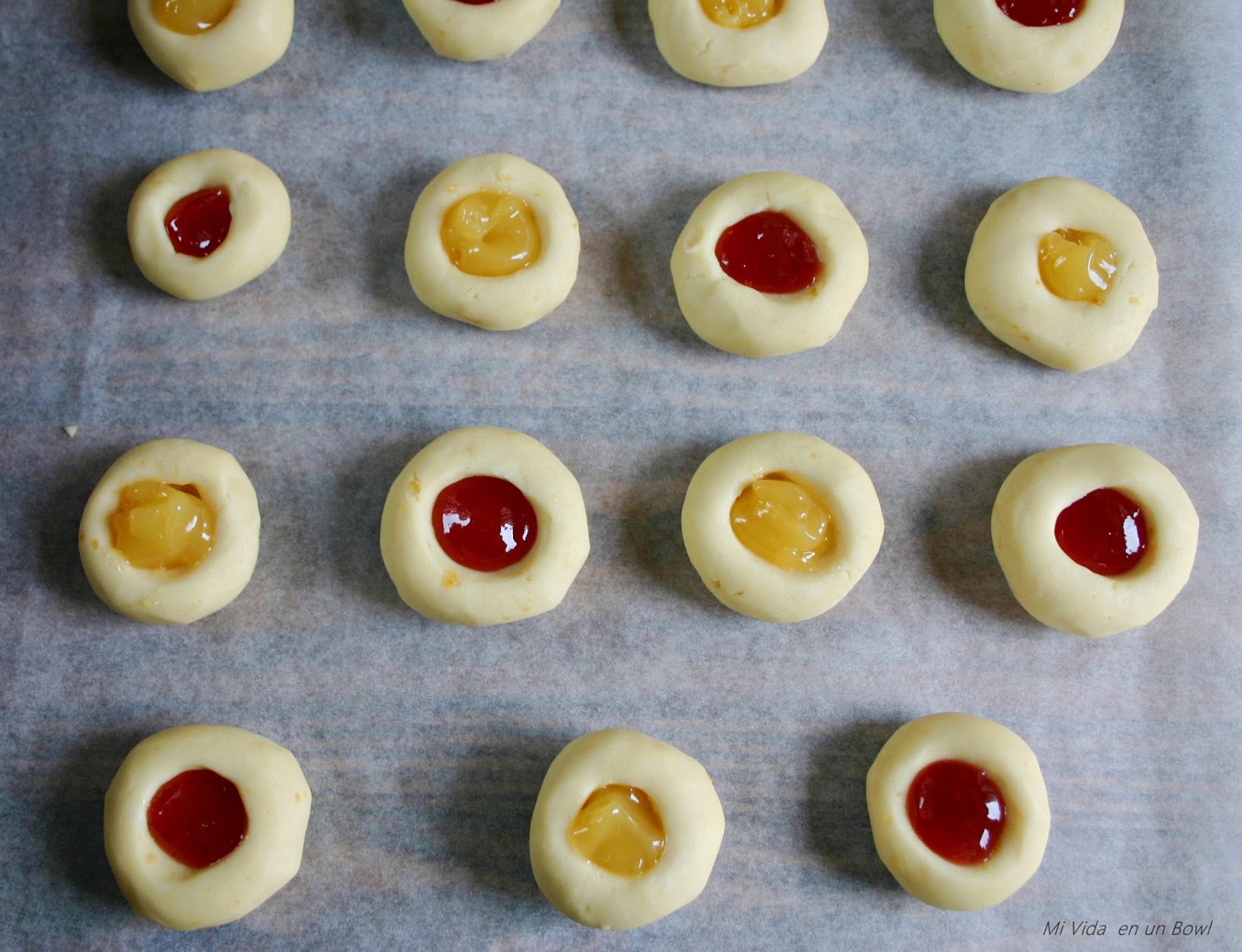
La versione che vi proponiamo nella nostra ricetta è quella forse più diffusa degli Ovis Mollis, spesso denominata nelle pasticcerie come "Occhio di bue": delle sfere leggermente schiacciate con al centro una sorta di "pupilla" data da marmellate o deliziose creme.


Ricetta: 

Ingredienti:


200 g. di burro senza sale

200 g. di farina
100 g. di zucchero a velo
100 g. di fecola di patate
5 tuorli d'uovo bolliti
1 cucchiaio di estratto di vaniglia (o una bustina di Vanillina)
un pizzico di sale
marmellate secondo il vostro gusto per la guarnizione

Preparazione:

1- Bolliamo le uova. Una volta fatto separiamo i tuorli e li mettiamo da parte.


2- In una ciotola, mettiamo tutti gli ingredienti, cioè la farina, i tuorli setacciati, la fecola di patate, il burro freddo tagliato a dadini, lo zucchero ed un pizzico di sale. Ammassiamo il tutto con le mani fino ad ottenere un impasto omogeneo. Ricopriamo la massa con un po' di pellicola alimentare e lo mettiamo in frigo per circa un paio d'ore.


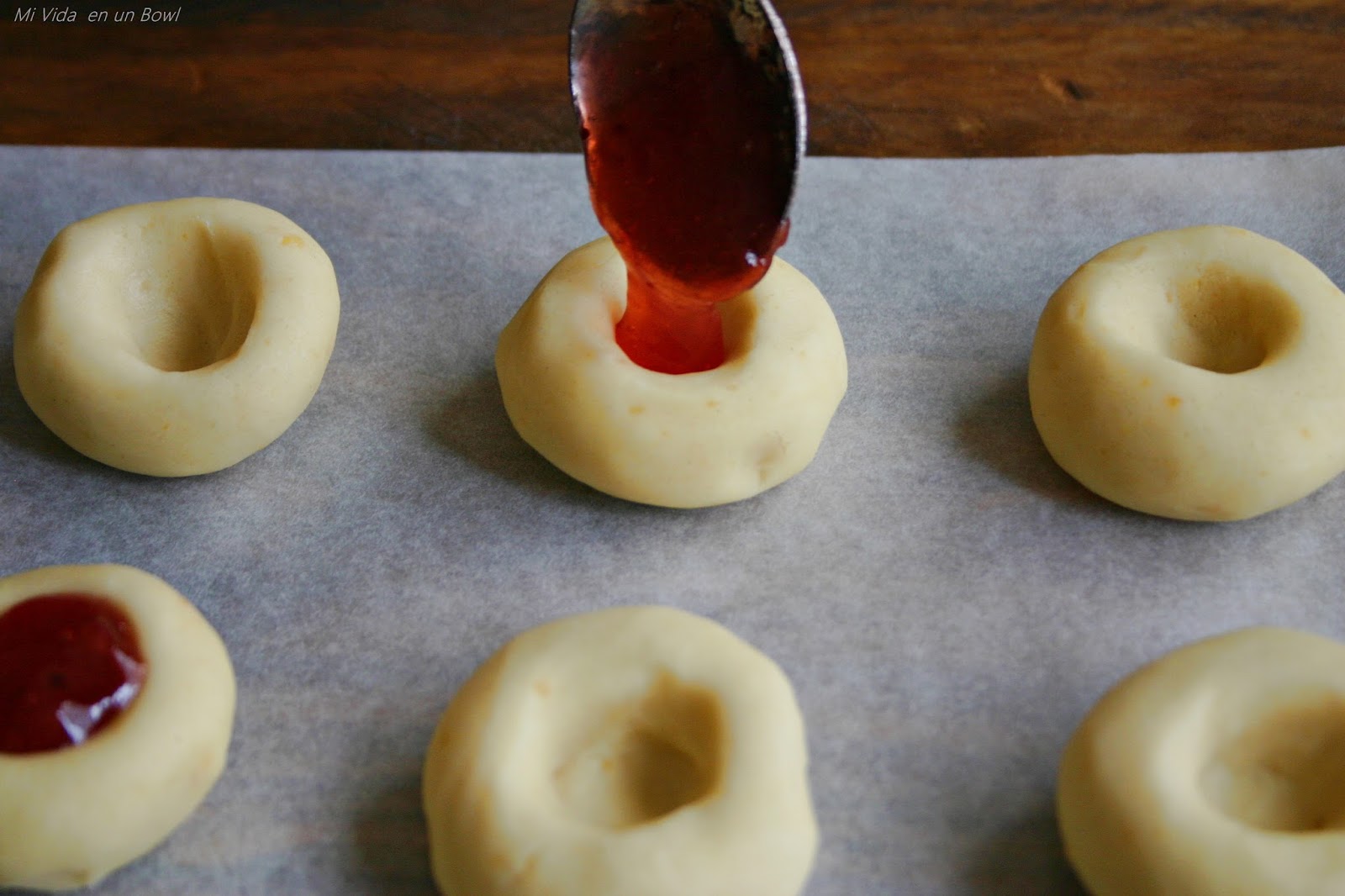
3- Tagliamo adesso la massa e faremo delle palline di circa tre centimetri di diametro. Le metteremo in una teglia ricoperta da carta forno e schiacceremo dolcemente il centro delle palline con il pollice, creando una concavità dove verseremo il nostro ripieno.


4- Preriscaldiamo il forno a 180ºC. Questi biscottini si possono guarnire sia prima di essere cotti in forno che dopo, se preferite. Noi di solito le decoriamo con delle coloratissime marmellate ai differenti sapori prima di metterle in forno, e in questo caso abbiamo scelto una marmellata ai frutti rossi ed al gusto lemon curd! Gnamm!


5- Cuocere all'incirca per 12 o 15 minuti. Non lasciate che la superficie si dori molto, lasciatela piuttosto bianchina, altrimenti si potrebbe rompere con facilità davvero esagerata anche per un Ovis Mollis!


Mi raccomando, provate questa facilissima ed irresistibile ricetta, la formula magica degli Ovis Mollis lascerà tutti quanti incantati!
Image and video hosting by TinyPic


Ovis Mollis: your next favourite sweet treat!


Ovis Mollis! Even if this may sound like a magical formula drawn directly from Harry Potter's high classes at Hogwarts, it's not an hocus pocus at all...even if only magic would explain the sudden disappearance of these cookies in a matter of second! Today we bring you the recipe of a delicious italian cookies that are made with pasta frolla, an ancient italian super crumbly version of what had later been know in English speaking World as pate brisee. Let's try this version, let's try pasta frolla! It's outrageously simple and I still haven't met anyone who hasn't deeply enjoyed these cookies!

The Ovis Mollis are a typical kind of cookies traditional of the North Western part of Italy. In the dough of this particular version of the Pasta Frolla the key ingredients are the boiled egg yolks instead of fresh yolks, which makes the texture of these cookies simply irresistible, they seems high patisserie, and they even taste better than high patisserie if we may be completely sincere with you. But they are super simple to do!


Their name, Ovis Mollis, mention the latin word "ovis" that in this case may be translated into "egg", indicating us the key ingredient of the recipe, but ovis may also mean "sheep", and in this case the phrase would be translated into somewhat similar to "fluffy as sheep wool", maybe because of their very typical "cloud-like" texture.


The Pasta Frolla is the base ingredient for many italian sweet dishes, that is much more crumbly, inestable and sandy than the pate brisee. That may be considered somewhat an handicap when preparing pies, but it's actually in the taste that the Pasta Frolla just brings us into another level. In italian, frolla means somewhat inestable, and the name tells us all about it! It is used into a lot of pies like the crostata, like the torte (tarts), like the frolle (sandy cookies) and the pasticcini (petit patisserie).

It's difficult to discover the history of Pasta Frolla, because it's an ingredient so universal that everyone claims the paternity of the recipe. So, let's stick to the facts: the first mention of this dough is to be found around year 1000 in the Republic of Venice, the Gate of the East.

Of course, we know that through the Serenissima (as it is called Venice), many products were introduced to Western Europe, like the sugar cane, imported from Egypt and Siria, quintessential ingredients for the pasta frolla. Lately, around year 1600, the pasta frolla reached the modern texture and taste, almost in the same time when the pate brisee was first described in the recipe books in France.

The Ovis Mollis, as we previously mentioned, are made with a kind of Pasta Frolla where the egg yolks are boiled and not fresh and it is used potato starch too. Maybe their origin is to be find into a cookies from Piedmont, called the Margheritine di Stresa. We are in the year 1857, in the very beautiful town of Stresa, in the Lago Maggiore, one of the most beautiful northern Italian lakes facing the Alps. When still a little girl, the future queen Margherita di Savoia (the queen after whom the Pizza is named, that queen may have been the World's first foodie!) used to enjoy its vacation in the Villa Ducale of Stresa, where a pastry chef, Pietro Antonio Bolongaro, was seeking an unique recipe for a cookie that were as fluffy as a cloud.

These cookies were offered to the future queen at her Forst Comunion, and Margherita suddenly fell in love with them. These cookies, named then "margheritine di Stresa" after her, were used also in the official meetings with the Queen after she moved to Rome at the Qurinal Palace. When the the son of the pastry chef Bolongaro inherited the atelier of his dad, he decided to sell these cookies to all, because they were just too good to be only a King's delicatessen. Still now, after 150 years, the "margheritine di Stresa" are a most typical product of the Lake Maggiore area.

The lake Maggiore and the Alps as seen from Isolabella


Ovis Mollis seems to be strongly related to the Margheritine di Stresa, since the two recipes have almost the same ingredients, even if the Margherite have less boiled eggs in their recipe.
Unluckily, we have no detailed histoty for the birth of the Ovis Mollis, but we can tell you that they appears for the first time in the 1907 book by Giuseppe Coccia "Il pasticcere ed il confettiere moderno" (the modern pastry chef and confectioner). Ciocca was a very creative artist/chef that was born in 1867 in Treviglio, an enchanting town between Milan and Bergamo. Truth be said, the recipe that we can find in Coccia's book is different from what we can we can see in modern days pastry shop: they are somewhat similar to little, flat doughnut.

The version of the Ovis Mollis that we show you today is maybe the most frequently used for this kind of Pasta Frolla, and it is called in the pastry ateliers as "Occhio di Bue", or in english "eye of the ox": balls of dough lighty pressed at the center, creating a sort of hollow filled with cream, chocolate or jam.


Recipe: 

Ingredients:


200 g. of unsalty butter

200 g. of flour
100 g. of icing sugar
100 g. of potato starch
5 boiled egg yolks
1 spoon of Vanilla extract (or some vainillina)
a pinch of salt
Some jam for the filling

Preparation:

1- Start with boiling the eggs and separating the egg yolks and the eggs white. Shred the egg yolks and then put them aside.


2- We put all the ingredients in a bowl: the flour, the shredded egg yolks, the potato starch, the cold butter sliced into dices, sugar and a pinch of salt. Knead it until we obtain an homogeneus dough. Cover the bowl with plastic wrap and pop it into the fridge for about two hours.


3- After two hours into the fridge, we cut the dough and we make little balls some 3 centimeters wide. We put it into a tray covered with baking paper, then we lightly press the center of the little balls creating the hollow for the filling.


4- Preheat the oven at 180ºC. These cookies can be baked with or without the filling, if you prefer. We usually choose different kind of jams and fill the cookies before we bake them, in this case we've chosen red fruit jam and lemon curd...yummy!


5- Bake the cookies for 12 to 15 minutes. Do not let the cookies to overbake, we don't want them to become golden brown, they must remain somewhat pale, otherwise they would be too much friable.


Enjoy them! Remember the magic formula for these italian cookies: Ovis Mollis! They'll put a spell on you!
Image and video hosting by TinyPic