Mostrando entradas con la etiqueta ovis mollis. Mostrar todas las entradas

miércoles, 11 de febrero de 2015

Gli Ovis Mollis: i tuoi prossimi biscotti preferiti!


Ovis Mollis! Sembra quasi una formula magica da Harry Potter, Wingardium Leviosa!  Ovis Mollis!
La magia, forse, c'entra eccome, ma è una magia gastronomica, e non occorrono bacchette magiche ma solo voglia di fare un dolce tra i più buoni che possiate mangiare con pochi semplici passi.
Gli Ovis Mollis sono un dolce tipico dell'Italia nord occidentale (soprattutto Piemonte e Lombardia) e sono a base di una versione leggermente modificata della pastafrolla.

La pastafrolla è una preparazione base per i dolci italiani, una versione molto più farinosa e deliziosamente instabile della sua cugina massa brisa. Il nome lo dice già tutto, è una massa estremamente friabile che si utilizza in ogni campo della pasticceria, dalle crostate ai biscotti, dalle torte ai pasticcini.

La storia della pastafrolla è difficile da ricostruire, anche se sappiamo che una prima notizia dell'utilizzo di tale preparazione la troviamo all'indomani dell'anno Mille a Venezia, la porta d'oriente.
Sappiamo che attraverso la Serenissima giungevano nel Vecchio Continente alcuni indispensabili ingredienti, come ad esempio la canna da zucchero, importata dall'Egitto e dalla Siria.
In seguito venne perfezionata e giunse all'attuale consistenza attorno al 1600, con la nascita della grande pasticceria, più o meno negli stessi anni in cui i cugini d'Oltralpe creavano la pasta brisa.

L'Ovis Mollis, come dicevamo, è un tipo di pastafrolla, la cui particolarità sta nell'utilizzo delle uova sode e della fecola di patate. Forse la loro origine è legata a dei biscotti friabilissimi piemontesi, le Margheritine di Stresa, che nacquero pochi anni prima dell'Unità d'Italia, nel 1857, nella amena località omonima sul Lago Maggiore. La storia è presto detta: la futura regina Margherita di Savoia (a cui peraltro è dedicata la famosa pizza) ancora bambina era solita soggiornare d'estate nella Villa Ducale di Stresa, cittadina in cui operava un pasticcere, Pietro Antonio Bolongaro, impegnato a realizzare una ricetta per dei biscotti leggerissimi e friabilissimi. Tali dolci vennero offerti dal pasticcere in occasione della prima comunione della futura regina, e questi biscottini piacquero così tanto a Margherita che non vi rinunciò mai più, neppure una volta divenuta regina. Addirittura, la Margherita di Savoia stabilì che le Margheritine di Stresa, come vennero ribattezzate, sarebbero state offerte ogni anno in occasione del Ricevimento di Ferragosto della Casa Reale. Il figlio del pasticcere Bolongaro, una volta ereditato il laboratorio pensò di rendere disponibili a tutti questi semplicissimi ed ineguagliabili pasticcini, ed ancora oggi le Margheritine di Stresa sono un prodotto molto amato e tipico della zona occidentale del Lago Maggiore.


Il Lago Maggiore visto dall'Isolabella
Gli Ovis Mollis ci sembrano notevolmente ispirati alle Margheritine di Stresa, e le due ricette sono decisamente simili, se non fosse per la minore quantità di tuorli sodi nelle Margheritine rispetto alla ricetta degli Ovis Mollis. Purtroppo per quanto riguarda gli Ovis, non abbiamo da offrirvi un aneddoto, una storia o un anno esatto di nascita, ma sappiamo che li possiamo ritrovare con il loro nome per la prima volta nel libro di ricette di Giuseppe Ciocca dall'eloquente titolo "Il pasticciere ed il confettiere moderno", edito da Hoepli nel 1907. Ciocca era un poliedrico cuoco (e perfino un artista!) nato nel 1867 a Treviglio, deliziosa cittadina che si trova tra Milano e Bergamo.
Va detto che la forma che viene scelta dal Ciocca per la sua ricetta degli Ovis Mollis è diversa da quella che possiamo vedere oggi nelle pasticcerie: si tratta infatti di anelli schiacciati e non di biscottini a forma di sfera. Sull'origine del nome invece il mistero è fitto: in latino infatti può significare uova molli, nel senso che la morbidezza dei biscottini dipende in gran parte dalle uova sode. Ma Ovis può significare anche ovino, pecora, suggerendo forse un significato di un dolcetto soffice come la lana.

La versione che vi proponiamo nella nostra ricetta è quella forse più diffusa degli Ovis Mollis, spesso denominata nelle pasticcerie come "Occhio di bue": delle sfere leggermente schiacciate con al centro una sorta di "pupilla" data da marmellate o deliziose creme.


Ricetta: 

Ingredienti:


200 g. di burro senza sale

200 g. di farina
100 g. di zucchero a velo
100 g. di fecola di patate
5 tuorli d'uovo bolliti
1 cucchiaio di estratto di vaniglia (o una bustina di Vanillina)
un pizzico di sale
marmellate secondo il vostro gusto per la guarnizione

Preparazione:

1- Bolliamo le uova. Una volta fatto separiamo i tuorli e li mettiamo da parte.


2- In una ciotola, mettiamo tutti gli ingredienti, cioè la farina, i tuorli setacciati, la fecola di patate, il burro freddo tagliato a dadini, lo zucchero ed un pizzico di sale. Ammassiamo il tutto con le mani fino ad ottenere un impasto omogeneo. Ricopriamo la massa con un po' di pellicola alimentare e lo mettiamo in frigo per circa un paio d'ore.


3- Tagliamo adesso la massa e faremo delle palline di circa tre centimetri di diametro. Le metteremo in una teglia ricoperta da carta forno e schiacceremo dolcemente il centro delle palline con il pollice, creando una concavità dove verseremo il nostro ripieno.


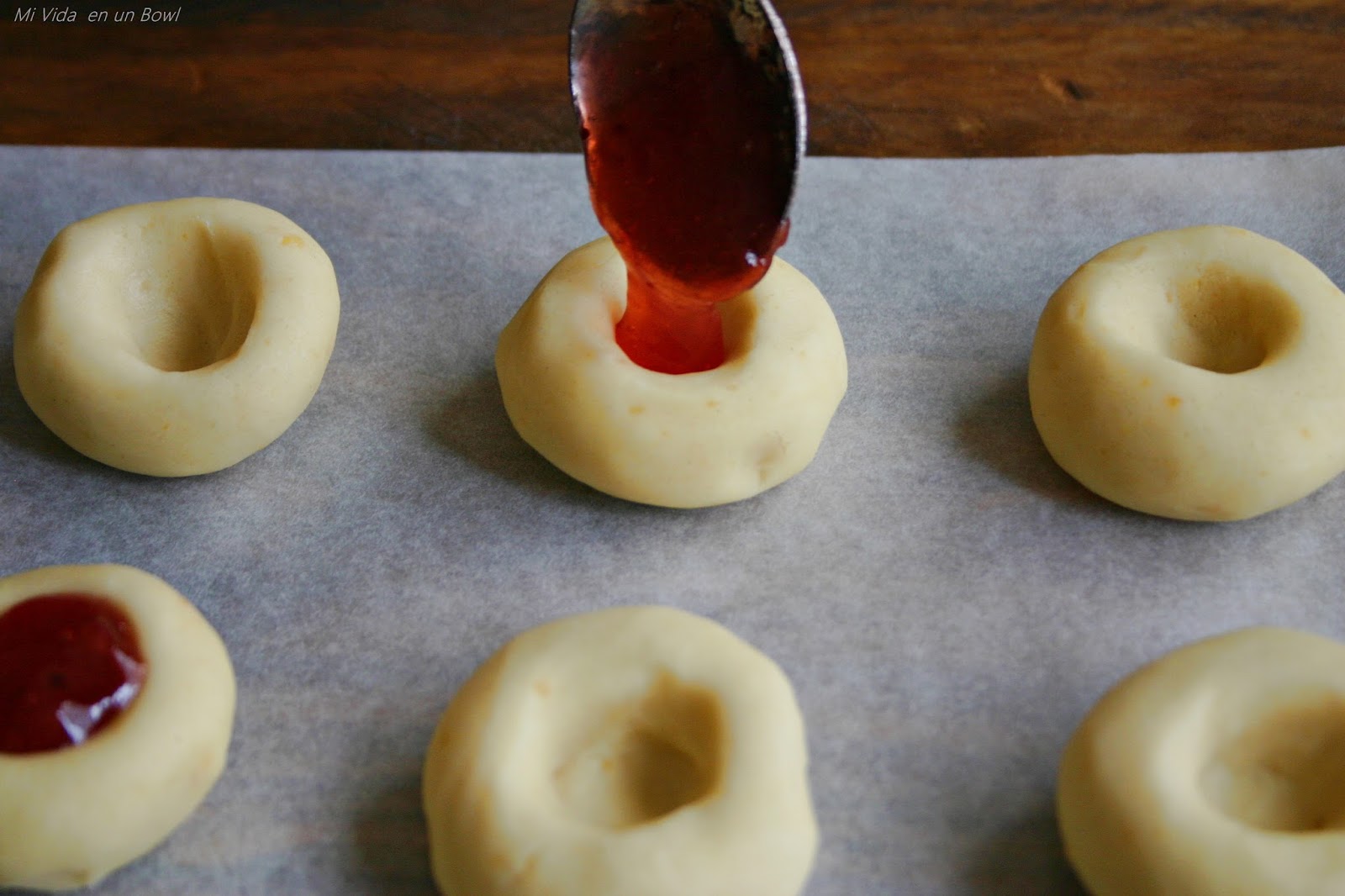


4- Preriscaldiamo il forno a 180ºC. Questi biscottini si possono guarnire sia prima di essere cotti in forno che dopo, se preferite. Noi di solito le decoriamo con delle coloratissime marmellate ai differenti sapori prima di metterle in forno, e in questo caso abbiamo scelto una marmellata ai frutti rossi ed al gusto lemon curd! Gnamm!
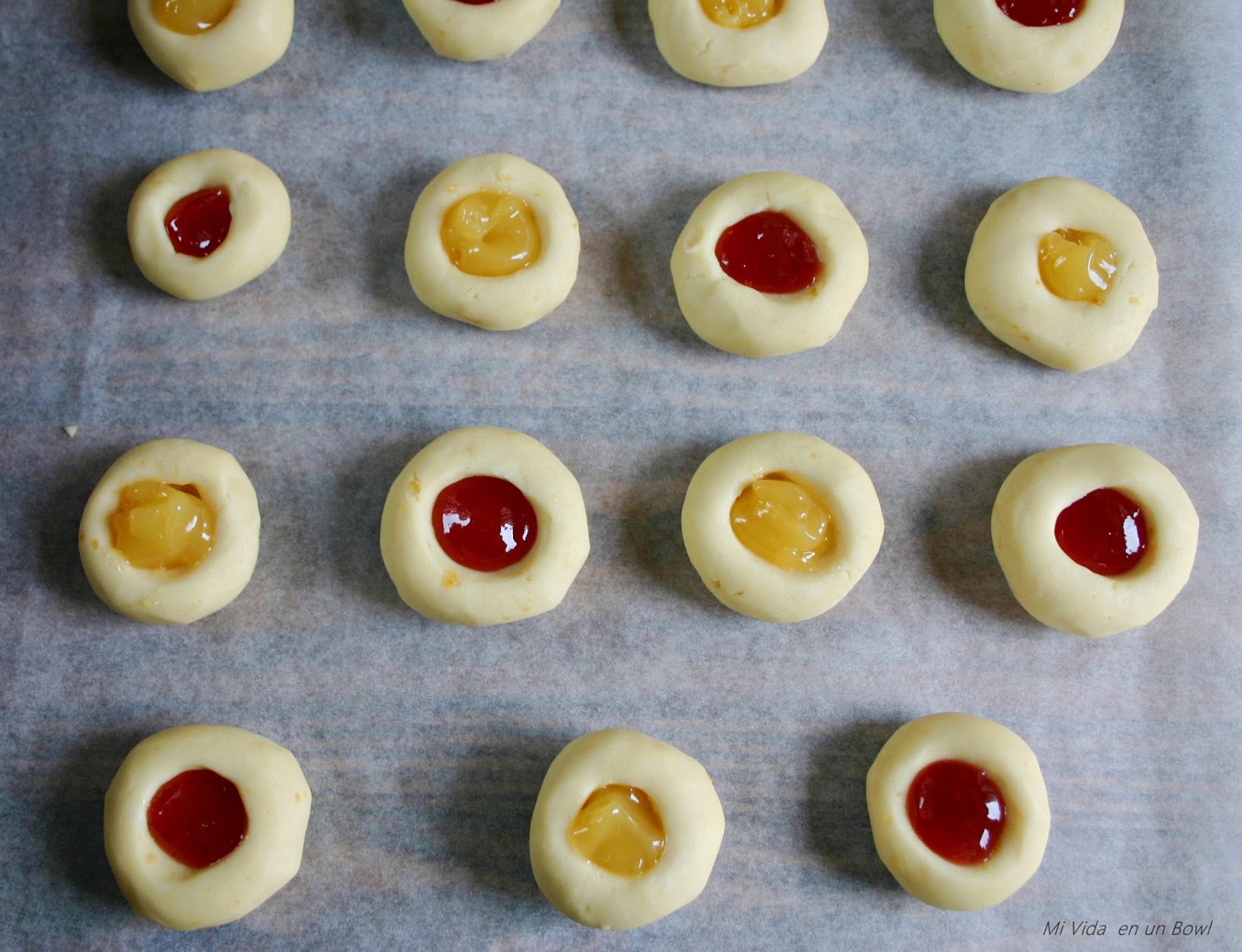


5- Cuocere all'incirca per 12 o 15 minuti. Non lasciate che la superficie si dori molto, lasciatela piuttosto bianchina, altrimenti si potrebbe rompere con facilità davvero esagerata anche per un Ovis Mollis!


Mi raccomando, provate questa facilissima ed irresistibile ricetta, la formula magica degli Ovis Mollis lascerà tutti quanti incantati!
Image and video hosting by TinyPic


Ovis Mollis: your next favourite sweet treat!


Ovis Mollis! Even if this may sound like a magical formula drawn directly from Harry Potter's high classes at Hogwarts, it's not an hocus pocus at all...even if only magic would explain the sudden disappearance of these cookies in a matter of second! Today we bring you the recipe of a delicious italian cookies that are made with pasta frolla, an ancient italian super crumbly version of what had later been know in English speaking World as pate brisee. Let's try this version, let's try pasta frolla! It's outrageously simple and I still haven't met anyone who hasn't deeply enjoyed these cookies!

The Ovis Mollis are a typical kind of cookies traditional of the North Western part of Italy. In the dough of this particular version of the Pasta Frolla the key ingredients are the boiled egg yolks instead of fresh yolks, which makes the texture of these cookies simply irresistible, they seems high patisserie, and they even taste better than high patisserie if we may be completely sincere with you. But they are super simple to do!


Their name, Ovis Mollis, mention the latin word "ovis" that in this case may be translated into "egg", indicating us the key ingredient of the recipe, but ovis may also mean "sheep", and in this case the phrase would be translated into somewhat similar to "fluffy as sheep wool", maybe because of their very typical "cloud-like" texture.


The Pasta Frolla is the base ingredient for many italian sweet dishes, that is much more crumbly, inestable and sandy than the pate brisee. That may be considered somewhat an handicap when preparing pies, but it's actually in the taste that the Pasta Frolla just brings us into another level. In italian, frolla means somewhat inestable, and the name tells us all about it! It is used into a lot of pies like the crostata, like the torte (tarts), like the frolle (sandy cookies) and the pasticcini (petit patisserie).

It's difficult to discover the history of Pasta Frolla, because it's an ingredient so universal that everyone claims the paternity of the recipe. So, let's stick to the facts: the first mention of this dough is to be found around year 1000 in the Republic of Venice, the Gate of the East.

Of course, we know that through the Serenissima (as it is called Venice), many products were introduced to Western Europe, like the sugar cane, imported from Egypt and Siria, quintessential ingredients for the pasta frolla. Lately, around year 1600, the pasta frolla reached the modern texture and taste, almost in the same time when the pate brisee was first described in the recipe books in France.

The Ovis Mollis, as we previously mentioned, are made with a kind of Pasta Frolla where the egg yolks are boiled and not fresh and it is used potato starch too. Maybe their origin is to be find into a cookies from Piedmont, called the Margheritine di Stresa. We are in the year 1857, in the very beautiful town of Stresa, in the Lago Maggiore, one of the most beautiful northern Italian lakes facing the Alps. When still a little girl, the future queen Margherita di Savoia (the queen after whom the Pizza is named, that queen may have been the World's first foodie!) used to enjoy its vacation in the Villa Ducale of Stresa, where a pastry chef, Pietro Antonio Bolongaro, was seeking an unique recipe for a cookie that were as fluffy as a cloud.

These cookies were offered to the future queen at her Forst Comunion, and Margherita suddenly fell in love with them. These cookies, named then "margheritine di Stresa" after her, were used also in the official meetings with the Queen after she moved to Rome at the Qurinal Palace. When the the son of the pastry chef Bolongaro inherited the atelier of his dad, he decided to sell these cookies to all, because they were just too good to be only a King's delicatessen. Still now, after 150 years, the "margheritine di Stresa" are a most typical product of the Lake Maggiore area.

The lake Maggiore and the Alps as seen from Isolabella


Ovis Mollis seems to be strongly related to the Margheritine di Stresa, since the two recipes have almost the same ingredients, even if the Margherite have less boiled eggs in their recipe.
Unluckily, we have no detailed histoty for the birth of the Ovis Mollis, but we can tell you that they appears for the first time in the 1907 book by Giuseppe Coccia "Il pasticcere ed il confettiere moderno" (the modern pastry chef and confectioner). Ciocca was a very creative artist/chef that was born in 1867 in Treviglio, an enchanting town between Milan and Bergamo. Truth be said, the recipe that we can find in Coccia's book is different from what we can we can see in modern days pastry shop: they are somewhat similar to little, flat doughnut.

The version of the Ovis Mollis that we show you today is maybe the most frequently used for this kind of Pasta Frolla, and it is called in the pastry ateliers as "Occhio di Bue", or in english "eye of the ox": balls of dough lighty pressed at the center, creating a sort of hollow filled with cream, chocolate or jam.


Recipe: 

Ingredients:


200 g. of unsalty butter

200 g. of flour
100 g. of icing sugar
100 g. of potato starch
5 boiled egg yolks
1 spoon of Vanilla extract (or some vainillina)
a pinch of salt
Some jam for the filling

Preparation:

1- Start with boiling the eggs and separating the egg yolks and the eggs white. Shred the egg yolks and then put them aside.


2- We put all the ingredients in a bowl: the flour, the shredded egg yolks, the potato starch, the cold butter sliced into dices, sugar and a pinch of salt. Knead it until we obtain an homogeneus dough. Cover the bowl with plastic wrap and pop it into the fridge for about two hours.


3- After two hours into the fridge, we cut the dough and we make little balls some 3 centimeters wide. We put it into a tray covered with baking paper, then we lightly press the center of the little balls creating the hollow for the filling.


4- Preheat the oven at 180ºC. These cookies can be baked with or without the filling, if you prefer. We usually choose different kind of jams and fill the cookies before we bake them, in this case we've chosen red fruit jam and lemon curd...yummy!


5- Bake the cookies for 12 to 15 minutes. Do not let the cookies to overbake, we don't want them to become golden brown, they must remain somewhat pale, otherwise they would be too much friable.


Enjoy them! Remember the magic formula for these italian cookies: Ovis Mollis! They'll put a spell on you!
Image and video hosting by TinyPic