Mostrando entradas con la etiqueta sweets. Mostrar todas las entradas

jueves, 6 de noviembre de 2014

Candied fruit filled Donut


rosquetes rellenos de fruta o pasas


Want something sweet, fast and easy for these autumn's afternoons? Well, that great! Put a pot of water on heat, we'll bring you some rosquetes!

Rosquetes, rosquillas, donut...they have a thousand of names! But they all have got an important characteristic: they're all sooo good! They're typical in many festive occasions, like Christmas, Holy week or Carnival, but they're excellent for any occasion throughout the year, as a breakfast or a snack too!

Today we'll bring you a double donut, they're extremely easy do to, I grant you, they will be eaten in a blink of an eye! They're filled with raisin and almond, but at the endo of the day, you choose freely the ingredients, you can change it your way! So, what are you waiting for? Join the donut cause! Furthermore, if you've got children, they'll have a load of fun! Oh, just don't consider the mess you'll have in you kitchen...flour! Flour everywhere! Well, at least they've enjoyed the baking!


Ingredientes básicos para hacer rosquetes
Ingredients 


Ingredients:

  • 400 g. of flour
  • 100 g. of sugar
  • 2 eggs
  • 100 ml.of olive oil
  • 100 ml. of milk
  • 1 tsp of aniseed
  • 1 tsp of  baking powder
  • 100 g. of minced almonds
  • Candied fruit or raisin to taste
  • Oil to fry


rosquetes de pasas
Rosquetes, rosquillas...no importa cómo los llames, están buenísimos!


Preparation:

- Mix together all the ingredients, adding last the sifted flour.

- Knead a little bit with the hands in a table or a surface covered with flour, until you obtain an uniform dough. It shouldn't be too sticky, you want it just to be a little bit soft. Cover it and let it rest a while.

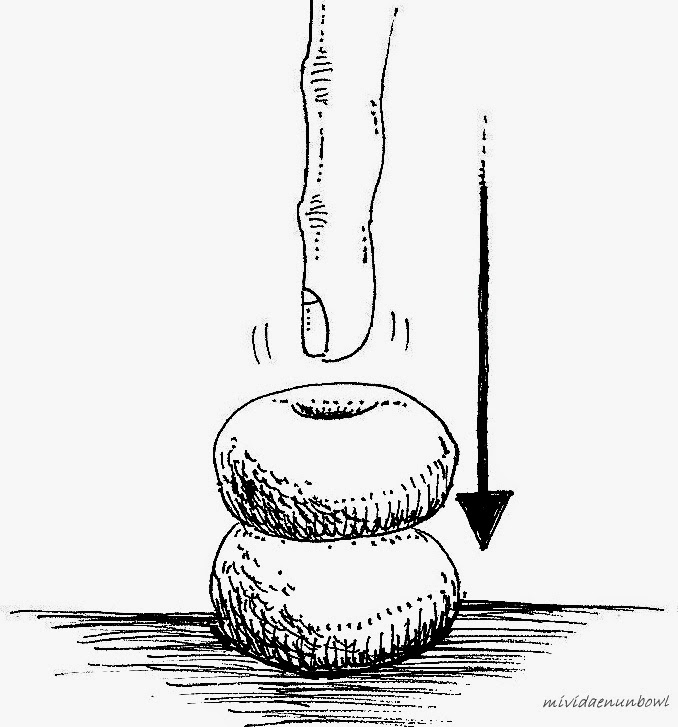
- Grease your hands with the oil so the dough will not stick to you hands and work the dough until you obtain balls that are more or less uniform. Put a ball above the other and insert your finger in the dough so to punch a hole in the dough and stick together the two donuts. In this way you'll have a "twin donut".


- Fry them in abundant hot oil. Use a deep pan to fry them, so, when you put the donuts to fry one by one, they'll drown at the beginning, but then they'll float. When they do so, just turn them upside down and when they'll be golden brown, just take them out of the boiling oil and sprinkle them with confectioner's sugar. They're just so fast to do!


Interior del rosquete
Yummy! The interiors of these donuts looks like a cake!

Image and video hosting by TinyPic

jueves, 3 de julio de 2014

The historical chocolate of Modica

Chocolate of Modica
Chocolate has always been considered an extraordinary food, almost as if it was food of gods. But the beloved today's chocolate is very different from the original product that was consumed in pre-columbian central America. The Aztecs called it Xocoatl (spelled "choco-wotel"), and they loved to drink it after toasting, mincing and beating it, obtaining a sort of energetic and foamy "caffè Americano" of that time: bitter, not so tasty and perfect to get you though a stressful aztec's working day.


The codex Nuttall represents two aztecs noblemen drinking xocoatl
North of Aztecs, in what nowadays is Mexico, Xocoatl was consumed differently, in a much more tasty way: cocoa beans were minced above a traditional working stone until the greasy part came out, the cocoa butter, creating a sort of grainy and soft paste. Once that the spanish Conquistadores arrived, that beans was brought to the homeland. Still nowadays, in some places in Spain still nowadays something called "chocolate a la piedra" (in english, "chocolate onto stones") is produced, at the same old way it was produced in Mexico and Guatemala.


The exterior typical looking of chocolate of Modica
Spain at that time owned Sicily too, one of the most fertile islands of Mediterranean sea. During the 1500 chocolate beans arrived in Sicily too, in a land of breathtaking beauty, the Modica county in Val di Noto. At that time, Modica boasted the most developed agricolture of the island. During the XVI century, cocoa was just a fashonable product for popes and empereors.
But we all know sicilians aren't people that accept a product without adding their own genial  and inimitable touch. And this is when the chocolate of Modica was invented. Originally it was a special sweet that noblemen used to eat during their celebrations and parties, then it became more and more famous, until nowadays is recognized by gourmands worldwide as one of Sicily's most fascinating gastro-historical products, even if it still awaits a proper recognition in the mass culture.


How do they produce this very original kind of chocolate?  Once that cocoa beans are toasted and minced you'll obtain a sort of a "dough" rich in cocoa butter, you'll warm it up a little bit, but never above 40° C. Next step, add in that dough the sugar crystals, usually cane or granulated sugar. It is important to keep the temperature low during the whole process in order to keep incact the sugar crystals: in the chocolate of Modica, crystals must be seen and must be tasted. Because of its grainy texture and its aromatic and "raw" taste, this chocolate is perfect with strong tastes, unlikely to be added to other kinds of chocolate, like pepper, cinnamon, ginger and of course vanilla, but also lemon and orange zest: we're in Sicily at the end! These kinds of chocolate have little in commons with the other "chocolates with taste of...".


Intact sugar crystals inside of the chocolate

The quantity of cocoa is generally pretty high, usually 65% or above, until 90% or so. The chocolate historically was minced above lava stones, lightly warmed up. Cocoa beans were pressed with heavy roll pins known as "pistuni" in sicilian dialect. Here we can find the main differences between this chocolate of Modica with the modern one, invented in 1880 by Rudolphe Lindt (we'll talk about this history in another occasion). In Lindt's process, melted chocolate is mixed very well, letting it become homogeneous and creamy (this process is known as concage), while in Modica's chocolate we have no mixing at all, and this keeps all the bitter and elegant flavour of the tannines intact, giving to the chocolate of Modica a sort of rustic refinement.


The duomo of San Giorgio, the cathedral of Modica

From year 2000 on, we've witnessed a strong both touristical and gastronomical rediscovering of the Val di Noto in Sicily, partly due to the assignement of Unesco World Heritage site title to the Noto Valley because of its extraordinary heritage of baroque achitectural jewels in the valley, making it undoubtedly one of the World's art capitals of Settecento, or the 1700s. In 2003 was created a consortium to protect the original and traditional product, and some 20 producers were listed. A quality guarantee IGP (Indicazione Geografica Protetta) was then established. Since 2009, along with the international organization FCO (Fine Chocolate Organization) a chocolate festival called Chocobarocco was organized.


How high will reach the chocolate of Modica in this rise, is yet to see. But wherever will go, we'll be there! We advice you to see this gogeous part of Sicily, both for gastronomical and artistical merits!


yong or old, everyone loves chocolate of Modica!


Very heartful sicilian greetings!


Tom

domingo, 6 de abril de 2014

Easter Hot Cross Buns


Easter time is getting closer, and lots of traditional Easter recipes inundates our homes. We'd love to fill our bowl with some of the sweets that are typical of this period. We wanted to start our Holy Week traditional recipes collection with something that's not quite typical of our borough, but that we learned to love a lot in the last few years, since we started eating them all year round he he. Sorry Britons! 


Those buns have many names, Cross Buns, Good Friday Buns, Easter Buns, etc...but their original name is Hot Cross Buns, and the tradition states that they are to be eaten on Good Friday, and are typical of Commonwhealth countries like United Kingdom, Australia, New Zealand and South Africa. They starts to crowd bakeries during Lent, and they are buns filled with currants, and their typical feature is the cross that decorates them.

The cross, symbol of the Crucifixion, has always been related to Christian tradition, but it seems that this feature on the buns comes actually from pagan era, where the crossed buns were used to honour the goddess Eostre, or to represent the four lunar phases. In the United Kingdom, during the reign of Isabel II of England, it was prohibited the sell and the consumption of these buns, with few exceptions admitted: burials, Christmas or Good Friday being amongst them. Lots of legends and superstitions too surround them, for example it is said that they have healing powers. Sharing a Hot Cross Buns with another person guarantee ethernal friendship. It is also said that hanging a Hot Cross Buns on a wall prevents the house from fires, or a ship from shipwrecks.


Today there are many modern varieties of these buns, using the same base but filling it with other kinds of dehydrated fruits or even chocolate. In Czech Republic there is a very similar bun, used in this time of the year too.
Today, we will bring you our own version, where we added to the traditional recipe zested nutmeg and dehydrated pineapple and papaya. We hope you like it!

Ingredients:
  • 300 ml of milk
  • 60 g.of butter
  • 500 gr. of flour
  • 1 spoonful of salt ( 1 tsp)
  • 100 gr. of sugar
  • 7 g. of bakery yeast (1 envelope of dehydrated yeast)
  • 1egg
  • 50 g. aprox. of small minced dehydrated fruits
  • 100 g. aprox. of currants
  • 1 spoonful of cinnamon ( 1 tsp)
  • 1/2 spoonful of zested nutmeg


Glaze icing:
  • Golden Syrup ( 2 spoons)
  • water ( 3 spoons)
For the decoration (cross):
  • flour ( some 3 spoons approx.)
  • water

Preparation:

1º- Put a pot with milk on heat, and let it boil. Retire from heat and wait for it to cool down.

2º- Put the flour, the sugar, the salt, the yeast, the butter and the egg in a bowl. Mix them together, and gently pour the milk. Stir a little bit, until you obtain a sort of sticky mass.


3º- Add the spices now (in my case, the zested nutmeg and the cinnamon), together with the currant and the dehydrated fruits. Keep on stirring, until we obtain a soft and elastic dough. If you see it too sticky, just add some more flour. We can do this part by hand of with a machine. 
4º- Put the dough to rest in a bowl that we previously grassed, and cover it with a plastic wrap. Let it rest for about an hour, or until it doubled its size.
 
 5º- Do some little ball with your hands, about the same size each: if you want you can weigh them to be sure. In my case, each ball is some 80 grams each. Put the balls in an oven tray above the cooking paper and let it rest again for another hour. Please be sure that each ball have enough space around him, a couple of inches will be perfect.

6º- After that, put three spoonful of flour in a bowl, and gently add some water until you obtain a sort of cream. Put this cream in a piping bag and decorate the buns with the trademark cross.


7º- Put the tray in the preheated oven at 200°C, for about 20-25 minutes, or until they are golden brown.

8º- To moisten our buns, put the Golden Syrup and some water in a little pot, and put on heat until it melts completely. If we don't have Golden Syrup, we can use honey, some jam or simply water and sugar.
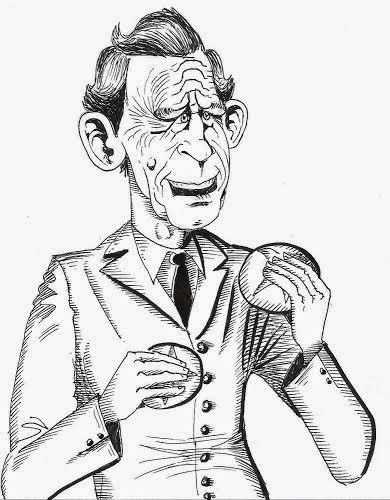
Charles, Prince of Wales, loves to eat our Hot Cross Buns two by two!

9º- When the buns are still very hot we paint with the moisture their surface with a cooking brush and...here they are! ;)


We can preserve well the buns in a tin can during 4 or 5 days. If they're not just made, I prefet to warm them up a little bit, since they are to be eaten hot. You can eat them alone, with jam, sandwich-like with ham or salami...that a matter of taste! Whether you followed the tradition or not, they are just excellent! And even if they are typical of Easter time...who can forbid us eating them all year round? Enjoy them!


Greetings,

AnGie