Mostrando entradas con la etiqueta lindt. Mostrar todas las entradas

jueves, 3 de julio de 2014

The historical chocolate of Modica

Chocolate of Modica
Chocolate has always been considered an extraordinary food, almost as if it was food of gods. But the beloved today's chocolate is very different from the original product that was consumed in pre-columbian central America. The Aztecs called it Xocoatl (spelled "choco-wotel"), and they loved to drink it after toasting, mincing and beating it, obtaining a sort of energetic and foamy "caffè Americano" of that time: bitter, not so tasty and perfect to get you though a stressful aztec's working day.


The codex Nuttall represents two aztecs noblemen drinking xocoatl
North of Aztecs, in what nowadays is Mexico, Xocoatl was consumed differently, in a much more tasty way: cocoa beans were minced above a traditional working stone until the greasy part came out, the cocoa butter, creating a sort of grainy and soft paste. Once that the spanish Conquistadores arrived, that beans was brought to the homeland. Still nowadays, in some places in Spain still nowadays something called "chocolate a la piedra" (in english, "chocolate onto stones") is produced, at the same old way it was produced in Mexico and Guatemala.


The exterior typical looking of chocolate of Modica
Spain at that time owned Sicily too, one of the most fertile islands of Mediterranean sea. During the 1500 chocolate beans arrived in Sicily too, in a land of breathtaking beauty, the Modica county in Val di Noto. At that time, Modica boasted the most developed agricolture of the island. During the XVI century, cocoa was just a fashonable product for popes and empereors.
But we all know sicilians aren't people that accept a product without adding their own genial  and inimitable touch. And this is when the chocolate of Modica was invented. Originally it was a special sweet that noblemen used to eat during their celebrations and parties, then it became more and more famous, until nowadays is recognized by gourmands worldwide as one of Sicily's most fascinating gastro-historical products, even if it still awaits a proper recognition in the mass culture.


How do they produce this very original kind of chocolate?  Once that cocoa beans are toasted and minced you'll obtain a sort of a "dough" rich in cocoa butter, you'll warm it up a little bit, but never above 40° C. Next step, add in that dough the sugar crystals, usually cane or granulated sugar. It is important to keep the temperature low during the whole process in order to keep incact the sugar crystals: in the chocolate of Modica, crystals must be seen and must be tasted. Because of its grainy texture and its aromatic and "raw" taste, this chocolate is perfect with strong tastes, unlikely to be added to other kinds of chocolate, like pepper, cinnamon, ginger and of course vanilla, but also lemon and orange zest: we're in Sicily at the end! These kinds of chocolate have little in commons with the other "chocolates with taste of...".


Intact sugar crystals inside of the chocolate

The quantity of cocoa is generally pretty high, usually 65% or above, until 90% or so. The chocolate historically was minced above lava stones, lightly warmed up. Cocoa beans were pressed with heavy roll pins known as "pistuni" in sicilian dialect. Here we can find the main differences between this chocolate of Modica with the modern one, invented in 1880 by Rudolphe Lindt (we'll talk about this history in another occasion). In Lindt's process, melted chocolate is mixed very well, letting it become homogeneous and creamy (this process is known as concage), while in Modica's chocolate we have no mixing at all, and this keeps all the bitter and elegant flavour of the tannines intact, giving to the chocolate of Modica a sort of rustic refinement.


The duomo of San Giorgio, the cathedral of Modica

From year 2000 on, we've witnessed a strong both touristical and gastronomical rediscovering of the Val di Noto in Sicily, partly due to the assignement of Unesco World Heritage site title to the Noto Valley because of its extraordinary heritage of baroque achitectural jewels in the valley, making it undoubtedly one of the World's art capitals of Settecento, or the 1700s. In 2003 was created a consortium to protect the original and traditional product, and some 20 producers were listed. A quality guarantee IGP (Indicazione Geografica Protetta) was then established. Since 2009, along with the international organization FCO (Fine Chocolate Organization) a chocolate festival called Chocobarocco was organized.


How high will reach the chocolate of Modica in this rise, is yet to see. But wherever will go, we'll be there! We advice you to see this gogeous part of Sicily, both for gastronomical and artistical merits!


yong or old, everyone loves chocolate of Modica!


Very heartful sicilian greetings!


Tom

El chocolate histórico de Módica

Antiguo chocolate de Módica en Sicilia
Chocolate de Módica
Al chocolate se le otorgan propiedades extraordinarias, casi como si de un alimento de dioses se tratase. Sin embargo, el chocolate que hoy conocemos y adoramos todos, es muy diferente del producto original, el cual procedía de las tierras Aztecas de la América central precolombina. Aquel chocolate era llamado xocoatl ( pronunciado "chocouatel"), que se consumía después de haberlo tostado, molido, mezclado con agua y batido.
Codex Nuttall representando nobles aztecas beciendo xocoatl
El líquido espumoso que se conseguía a través de este procedimiento, era probablemente lo opuesto al chocolate actual, pues era un producto amargo y nada sabroso que se solía utilizar como un tipo de "café americano" para soportar las duras jornadas de trabajo de los aztecas. En realidad, más al norte, en el actual México, el xocoatl se consumía de un modo algo más gustoso, ya que los granos de cacao se trituraban sobre una piedra hasta obtener la parte más deliciosa: la mantequilla de cacao. Esto permitía conseguir un tipo de pasta más blanda y granulosa.

 
Consistencia harinosa de tableta de chocolate de Módica
Apariencia de la tableta de chocolate de Módica

A través de los conquistadores españoles, los granos de cacao se transportaron hasta España, donde aún hoy en día existen zonas en las cuales, después de siglos, se consume el llamado " chocolate a la piedra", producido exactamente como hacían los habitantes precolombinos de México.

Sicilia, una de las islas más fértiles del mediterráneo, por aquella época se encontraba bajo dominio español. A lo largo del 1500, dichos granos de cacao llegaron al condado de Módica, una tierra rica en belleza y fertilidad, de hecho era la zona de Sicilia más desarrollada, en cuanto a agricultura se refiere. Aquí llegó entonces la moda del cacao, que por aquellos tiempos aún era un producto exótico y al alcance de muy pocos ( papas, reyes, nobles...).

Pero, como sabemos, el pueblo siciliano le da su toque personal y auténtico a todos los productos, y es de este modo que en el 1600 nace el chocolate de Módica. Dicha especialidad posteriormente se convierte en un dulce típico, elaborado en las casas de las familias más ricas en épocas de fiesta, para después, poco a poco, irse difundiendo. Hoy en día tiene reconocimiento internacional, como uno de los productos gastronómicos e históricos más fascinantes de Sicilia, aunque a nivel popular el chocolate de Módica no tiene todavía un gran reconocimiento, o al menos no el que se merecería.

Este genuino chocolate se produce una vez que se han tostado y molido las semillas de cacao, tal y como se hacía en las primeras elaboraciones aztecas. De este modo, se consigue una masa rica en mantequilla de cacao, la cual viene calentada ligeramente para poder hacerlo más fluido, nunca más allá de los 40ºC. A dicha mezcla se le añaden cristales de azúcar, por lo general azúcar granulado o de caña. Es importante mantener la temperatura baja durante toda la elaboración, para impedir que el azúcar se derrita, ya que el azúcar presente en el chocolate de Módica debe verse y sentirse en el paladar. 


cristales de azúcar intactos dentro del chocolate

El chocolate de Módica, debido a su consistencia granulosa o arenosa y su sabor aromático, a la vez que "rústico", es perfecto para combinar con aromas que tengan una fuerte personalidad, con los cuales de ha llegado a tener una gran variedad de sabores verdaderamente originales, no conocidos anteriormente en el mundo del chocolate. Así, podemos hablar del chocolate de Módica a la pimienta, a la canela, al jengibre o a la vainilla, pero también al limón o naranja.

La cantidad de cacao presente en el chocolate es bastante elevada, generalmente por encima del 65%, e incluso puede llegar al 90%. La producción histórica se realizaba utilizando las piedras de lava previamente calentadas, sobre las cuales los granos de cacao se escachaban con rodillos pesados, que conseguían refinar cada vez más la " harina" que se obtenía. La principal diferencia existente entre el sabor del chocolate modicano y el moderno que se inventó en el 1880 por Rudolphe Lindt (del que hablaremos en otra ocasión, pero pueden hacerse una idea de quién es verdad?) es que el chocolate de Módica no se mezcla constantemente y esto hace que el sabor permanezca inalterable, con ese característico toque amargo que le dan los taninos, que otorga a la versión siciliana del chocolate una sabor muy puro y rústico. Además, cabe destacar, que desde los principios del mundo del chocolate en América central, este producto se tomaba como una bebida, pues la harina obtenida se solía mezclar con agua, en cambio el de Módica es uno de los primeros que se consumieron sólidos a modo de tableta.

Desde el año 2000 en adelante, ha habido un fuerte redescubrimiento turístico y gastronómico del Val di Noto, el valle donde se fabrica este delicioso producto, el cual ha conseguido el título de Patrimonio de la Humanidad por parte de la Unesco, debido a su gran riqueza arquitectónica.


El duomo de San Giorgio en Módica en Val di Noto

En el 2003 se crea un consorcio de protección del auténtico producto tradicional, con una veintena de productores para conseguir la marca de calidad IGP ( Indicación Geográfica Protegida). Desde el 2009 se viene organizando, en colaboración con la asociación internacional FCO ( Fine Chocolate Organization) el festival del "Chocobarocco" (choco-barroco), pues es precisamente por este estilo arquitectónico que destaca esta bella zona de la isla.

No sabemos hasta donde llegará, en cuanto a fama se refiere, este producto tan original, pero nosotros seguiremos apostando por el! Sobra decir que os aconsejamos descubrir esta maravillosa zona de Sicilia, tanto si os mueven motivos gastronómicos o artísticos!


Apreciado por grandes y pequeños!ñam!


Un saludo alla siciliana ;)

Tom

sábado, 17 de mayo de 2014

Happy 50th birthday, Nutella!


Nutella is one of the World's most recognizeable products, and has a lovely image in popular culture. Everywhere you might be, you say "Nutella" and we bet the reaction on the face in front of you is a smile. People can't help but smile, when talking about chocolate cream. The product itself, Nutella, has been patented in 1964, and today we write this article to properly celebrate its 50th birthday!
Anyway, the history of this delicious hazelnut cream has older roots.
The idea of Nutella started with Pietro Ferrero (yes, the founder of the industrial family who gave us Ferrero and its Ferrero Rocher, Pocket Coffee, Kinder Ferrero and so on) commercialized a particular kind of hazelnut, typical of Piedmont region, north of Italy. The hazelnut in question was the "Nocciola Tonda Gentile delle Langhe", and it is the base of the Gianduja chocolate, now pretty famous too!

Ferrero, in 1946, started the production of the "Giandujot", a sort of chocolate cream still based upon the Gianduja. Then, in 1951, the product evolved into something he called "SuperCrema", and, the word says it all, this time it was more creamy. But it wasn't until 1964 that Pietro Ferrero's son, Michele, invented the Nutella, gaming with the word "nut" for the hazelnuts and "ella" to make it sounds good in italian. The product had a blasting success right from the start. Seems like everyone was waiting for it, somehow.


The Gianduja piemontese chocolate cream
But if Nutella is based upon the Gianduja chocolate, what is the history of the latter? Well, that's pretty interesting too! Sit down and relax, we're going back to Napoleon Era! The Gianduja, infact, was created in 1806 in one of the most chocolate friendly areas of Europe: Italy's Piedmont! The love story between Turin and Chocolate was going great, really great in the 1700s, with the Savoy crown loving it so much. But the Bandit Corse, the frenchman Napoleon Bonaparte (Piedmont always had a true love for its neighborhoods across the Alps, if you know what I mean), ordered a blockade agains british colonial products, and between them the cocoa nuts. The price of chocolate grew so much that Piedmont's Pasticceri started using a local product instead, a gourmet hazenut sweet and tasty. Guess what its name was? You're right, it was the "Nocciola Tonda Gentile delle Langhe", a very short name for a culinary excellence. The blockade ended, as Napoleon itself we would say, in the year 1813.

Gianduja by Novi, one of the best for us
But by that time, everyone in Turin started loving this new "chocolate", so tasty and yummy they couldn't help but eating it! Michele Prochet, a Pasticcere, or maitre chocolatier as they says across the Alps, then perfectioned the technique in 1852, toasting and thinly grinding the hazelnut. Prochet did that with one of the oldest chocolate industries in Europe, the Caffarel, from Piedmont too. By the way, a swiss maitre chocolatier went to Turin to study how the Caffarel produced chocolate, and then went back to Switzerland: he was Cailler, the father of Swiss chocolate!

The Gianduiotti, delicious gianduja chocolate candy
The Giandujotto, a small cioccolatino typical of Piedmont, was the fist confectioned chocolate candy in the history, and was distributed in the carnival of 1865 in the streets of Turin by the local typical masks, named "Gianduja". The name of the masks gave then name to the Gianduja products. The legend says that Giandujotto was invented giving a well delivered hit with a spoon full of gianduja cream.
Now you can stop reading and get out finding a gianduja chocolate candy, a Nutella or what you want instead!


We understand that, do not worry! Happy birthday, Nutella! ;)

Tom


miércoles, 16 de abril de 2014

The history of the Easter Egg

The Easter Egg is the symbol itself of the Eastertide around the World and of course in Italy too, where it shares the status of hero of Easter celebrations along with the neapolitan Pastiera in south and the Colomba pasquale in the north of the Country. But beneath the thin layer of dark, white or milk chocolate (choose the one you prefer) our egg hides a World full of legends and histories. We don't wanna talk about the recipe today, we want to share with you the origin of one of the most recognizable gastronomical icon in the Western world. How was it created? It's a long long way back, so let's get started!


The eggs have always represented a strong mythological and symbolic element, often linked with religions. For example, we have decorated ostrich eggs from sixty thousands years ago...it was the origin of mankind itself! Then the Sumerian and the Egyptians used to put decorated and coloured eggs in the tombs. The ancient Romans used to put a red egg in the fields they cultivated in sign of good luck, saying "Omne vivum ex ovo", that is, everything that is alive came from an egg. There are also biblical legends from the roman era. Mary Magdalen, says the legend, when discovered that the tomb of Jesus was empty, immediately ran to tell the news to the Apostles. Peter, according to the legend, would have said then: "I will believe you, Mary Magdalen, only if those eggs in that basket will become red!". And suddenly the eggs actually became red. After that, in the first Christian era, in Mesopotamia, started the tradition of decorating and painting an egg red remembering the blood of Christ in the Good Friday.


But it was during the institution of Lent that the symbolical eggs of Easter became somewhat related to food: in the Lent, infact, there was the tradition of not eating eggs, and therefore the eggs were put aside and preservated for Easter. During the Middle Ages, it was a tradition to give to the servants eggs for Easter. There are various hypotesis about who created the chocolate eggs, some say it has been the king Louis XIV of France, other says it has been created in South America, where the cocoa plant, the xocoatl, is from. What we actually know is that the procedure to create the vacuum chocolate egg we see today has been invented in 1825 by the dutch chocolate artist Coenrad van Houte. This technique is known today -properly enough- as "dutching". In 1875 the english chocolatier John Cadbury started the massive distribution of the modern days Easter Eggs.
Cadbury's mini Easter eggs

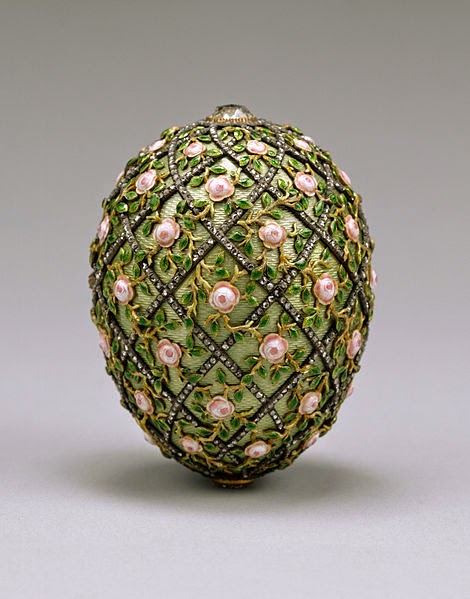
Then, between 1885 and 1917 the decorated Easter eggs became world icon,
because of the famous jewels made for the Tsars or Russia by the russian jeweller Peter Carl Fabergé. Since the popularity of the Fabergé eggs, the chocolate eggs started to become more and more famous, and started containing a little surprise.


After the World War II, the chocolate Easter Eggs became a pop culture icon linked to springtime and Easter, and new and ancient myths have been rediscovered, like for example the tradition of the Easter Bunny leaving the eggs in the garden in Northern Europe. Today, in parts of England, Germany and France, someone still organizes a family treasure hunt with kids on Easter Sunday looking for the hidden chocolate eggs. As a final note, we can add that the word "Easter" comes from the pagan Goddess of Eostre, that in the nordic mythologies was linked with the ideas of Nature and Springtime.


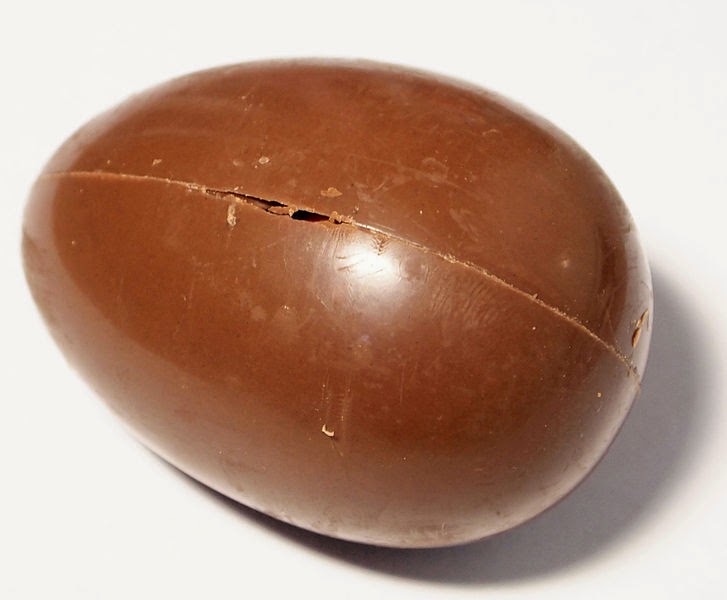
Our dark chocolate Easter egg...soo delicious!


Have a wonderful Easter!

Tom