Mostrando entradas con la etiqueta cocoa. Mostrar todas las entradas

jueves, 3 de julio de 2014

The historical chocolate of Modica

Chocolate of Modica
Chocolate has always been considered an extraordinary food, almost as if it was food of gods. But the beloved today's chocolate is very different from the original product that was consumed in pre-columbian central America. The Aztecs called it Xocoatl (spelled "choco-wotel"), and they loved to drink it after toasting, mincing and beating it, obtaining a sort of energetic and foamy "caffè Americano" of that time: bitter, not so tasty and perfect to get you though a stressful aztec's working day.


The codex Nuttall represents two aztecs noblemen drinking xocoatl
North of Aztecs, in what nowadays is Mexico, Xocoatl was consumed differently, in a much more tasty way: cocoa beans were minced above a traditional working stone until the greasy part came out, the cocoa butter, creating a sort of grainy and soft paste. Once that the spanish Conquistadores arrived, that beans was brought to the homeland. Still nowadays, in some places in Spain still nowadays something called "chocolate a la piedra" (in english, "chocolate onto stones") is produced, at the same old way it was produced in Mexico and Guatemala.


The exterior typical looking of chocolate of Modica
Spain at that time owned Sicily too, one of the most fertile islands of Mediterranean sea. During the 1500 chocolate beans arrived in Sicily too, in a land of breathtaking beauty, the Modica county in Val di Noto. At that time, Modica boasted the most developed agricolture of the island. During the XVI century, cocoa was just a fashonable product for popes and empereors.
But we all know sicilians aren't people that accept a product without adding their own genial  and inimitable touch. And this is when the chocolate of Modica was invented. Originally it was a special sweet that noblemen used to eat during their celebrations and parties, then it became more and more famous, until nowadays is recognized by gourmands worldwide as one of Sicily's most fascinating gastro-historical products, even if it still awaits a proper recognition in the mass culture.


How do they produce this very original kind of chocolate?  Once that cocoa beans are toasted and minced you'll obtain a sort of a "dough" rich in cocoa butter, you'll warm it up a little bit, but never above 40° C. Next step, add in that dough the sugar crystals, usually cane or granulated sugar. It is important to keep the temperature low during the whole process in order to keep incact the sugar crystals: in the chocolate of Modica, crystals must be seen and must be tasted. Because of its grainy texture and its aromatic and "raw" taste, this chocolate is perfect with strong tastes, unlikely to be added to other kinds of chocolate, like pepper, cinnamon, ginger and of course vanilla, but also lemon and orange zest: we're in Sicily at the end! These kinds of chocolate have little in commons with the other "chocolates with taste of...".


Intact sugar crystals inside of the chocolate

The quantity of cocoa is generally pretty high, usually 65% or above, until 90% or so. The chocolate historically was minced above lava stones, lightly warmed up. Cocoa beans were pressed with heavy roll pins known as "pistuni" in sicilian dialect. Here we can find the main differences between this chocolate of Modica with the modern one, invented in 1880 by Rudolphe Lindt (we'll talk about this history in another occasion). In Lindt's process, melted chocolate is mixed very well, letting it become homogeneous and creamy (this process is known as concage), while in Modica's chocolate we have no mixing at all, and this keeps all the bitter and elegant flavour of the tannines intact, giving to the chocolate of Modica a sort of rustic refinement.


The duomo of San Giorgio, the cathedral of Modica

From year 2000 on, we've witnessed a strong both touristical and gastronomical rediscovering of the Val di Noto in Sicily, partly due to the assignement of Unesco World Heritage site title to the Noto Valley because of its extraordinary heritage of baroque achitectural jewels in the valley, making it undoubtedly one of the World's art capitals of Settecento, or the 1700s. In 2003 was created a consortium to protect the original and traditional product, and some 20 producers were listed. A quality guarantee IGP (Indicazione Geografica Protetta) was then established. Since 2009, along with the international organization FCO (Fine Chocolate Organization) a chocolate festival called Chocobarocco was organized.


How high will reach the chocolate of Modica in this rise, is yet to see. But wherever will go, we'll be there! We advice you to see this gogeous part of Sicily, both for gastronomical and artistical merits!


yong or old, everyone loves chocolate of Modica!


Very heartful sicilian greetings!


Tom

sábado, 21 de junio de 2014

Welcome summer! Tiramisù popsicle recipe

To celebrate the coming of summer, we'll bring you a popsicle based on a very classical italian sweet: the World renown Tiramisù.


The Tiramisù is a very simple sweet dish, but it's not a classic in the sense of "old", it's a rather "new classic", since it was invented in...1962! I mean, come on! That's the day before yesterday! ;) How could people live without this marvel?

The original recipe was an idea of Mrs. Alba Campeol, in the beautiful city of Treviso, very near to Venice. She affirms that the idea came out after giving birth to her first son, when her mother and her mother-in-law used to bring her coffee and ladyfingers and tell her: "eat them all, that'll be good for you!". In Italian we say "tirare su" (rise up, come on!) when someone needs to get better, and starting with this idea, she decided together with the cook of the restaurant they owned to add some nourishing eggs with sugar and the mascarpone cheese.

Even though many (or everybody) thinks that Tiramisù has some liquor in it, it actually hasn't. Or shouldn't have, according Mrs. Campeol's original recipe, since it was precisely designed to be fit for everyone, from the childhood to the oldest one, and specially for those who needed to "tirarsi su", to recover themselves, making the liquor unfit for the recipe. The many tourist that visited the enchanting city of Treviso (we would advice you to do so!) were blown away from the simple and genial recipe, making it Worldwide famous, and this lead to the many versions of this sweet that we have nowadays.

Here you are an interview to Mrs. Campeol (in Italian) where she tells us the history and she also regrets not having patented her recipe in the Sixties! We're thankful and grateful anyway, Mrs. Campeol!


Ingredients:
  • 4 egg yolks
  • 2 egg whites
  • 100 g. of sugar
  • 400 g. of mascarpone cheese
  • 3 or 4 Savoiardi biscuits or ladyfingers
  • cocoa powder
  • a cup of coffee
  • a pinch of salt

Preparation:


1- Beat the egg yolks until they get foamy with an electric blender. You're looking for a pale white colour.

2- Add to the previous mix the mascarpone cheese and mix it togheter.
 
3- Beat the eggs white until they become foamy and we add this to the previous mix with round movements, from bottom to top in order to let the foam stand up straight.

4- We dip the Savoiardi or the ladyfingers in the coffee (it can be decaffeinated, instant coffee or espresso, you choose).


5- We put our mix in our popsicle or ice cream moulds, alternating with coffee-wet ladyfingers and cocoa powder and our mix again, as many times as we want, until the mould is filled and we end with some cocoa powder, then we put our wooden stick. We can also decide to put the ladyfingers at the center of the mould and the mix around them. This time I decided to do it with some little pieces of ladyfingers, that's a matter of tastes!


6- Put it into the freezer, if it's possible from a day to another, since it's a very creamy mix and it needs a lot of cold.


This time I've made it as a popsicle, but you can do it in a plum cake mould too.
Before pouring the mix, I cover the bottom with a plastic wrap, in order to avoid that our Tiramisù does not sticks to the bottom and can be removed easily. This version is to be made just like the popsicles, but with some more savoiardi biscuits and forming and alternate structure, just like the traditional Tiramisù: biscuits, mascarpone mix, cocoa powder and others biscuits, in that orden. This is what is called a "semifreddo", a sweet between a gelato and a traditional cake.


Happy start of Summer to everyone! Enjoy this ice creamy version of the Tiramisù!

Greetings,

AnGie

miércoles, 16 de abril de 2014

The history of the Easter Egg

The Easter Egg is the symbol itself of the Eastertide around the World and of course in Italy too, where it shares the status of hero of Easter celebrations along with the neapolitan Pastiera in south and the Colomba pasquale in the north of the Country. But beneath the thin layer of dark, white or milk chocolate (choose the one you prefer) our egg hides a World full of legends and histories. We don't wanna talk about the recipe today, we want to share with you the origin of one of the most recognizable gastronomical icon in the Western world. How was it created? It's a long long way back, so let's get started!


The eggs have always represented a strong mythological and symbolic element, often linked with religions. For example, we have decorated ostrich eggs from sixty thousands years ago...it was the origin of mankind itself! Then the Sumerian and the Egyptians used to put decorated and coloured eggs in the tombs. The ancient Romans used to put a red egg in the fields they cultivated in sign of good luck, saying "Omne vivum ex ovo", that is, everything that is alive came from an egg. There are also biblical legends from the roman era. Mary Magdalen, says the legend, when discovered that the tomb of Jesus was empty, immediately ran to tell the news to the Apostles. Peter, according to the legend, would have said then: "I will believe you, Mary Magdalen, only if those eggs in that basket will become red!". And suddenly the eggs actually became red. After that, in the first Christian era, in Mesopotamia, started the tradition of decorating and painting an egg red remembering the blood of Christ in the Good Friday.


But it was during the institution of Lent that the symbolical eggs of Easter became somewhat related to food: in the Lent, infact, there was the tradition of not eating eggs, and therefore the eggs were put aside and preservated for Easter. During the Middle Ages, it was a tradition to give to the servants eggs for Easter. There are various hypotesis about who created the chocolate eggs, some say it has been the king Louis XIV of France, other says it has been created in South America, where the cocoa plant, the xocoatl, is from. What we actually know is that the procedure to create the vacuum chocolate egg we see today has been invented in 1825 by the dutch chocolate artist Coenrad van Houte. This technique is known today -properly enough- as "dutching". In 1875 the english chocolatier John Cadbury started the massive distribution of the modern days Easter Eggs.
Cadbury's mini Easter eggs

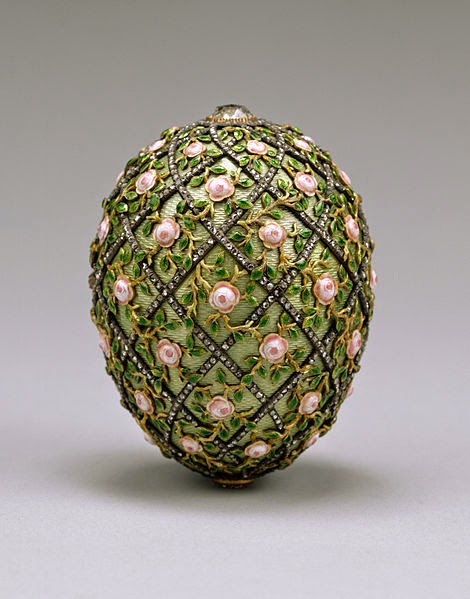
Then, between 1885 and 1917 the decorated Easter eggs became world icon,
because of the famous jewels made for the Tsars or Russia by the russian jeweller Peter Carl Fabergé. Since the popularity of the Fabergé eggs, the chocolate eggs started to become more and more famous, and started containing a little surprise.


After the World War II, the chocolate Easter Eggs became a pop culture icon linked to springtime and Easter, and new and ancient myths have been rediscovered, like for example the tradition of the Easter Bunny leaving the eggs in the garden in Northern Europe. Today, in parts of England, Germany and France, someone still organizes a family treasure hunt with kids on Easter Sunday looking for the hidden chocolate eggs. As a final note, we can add that the word "Easter" comes from the pagan Goddess of Eostre, that in the nordic mythologies was linked with the ideas of Nature and Springtime.


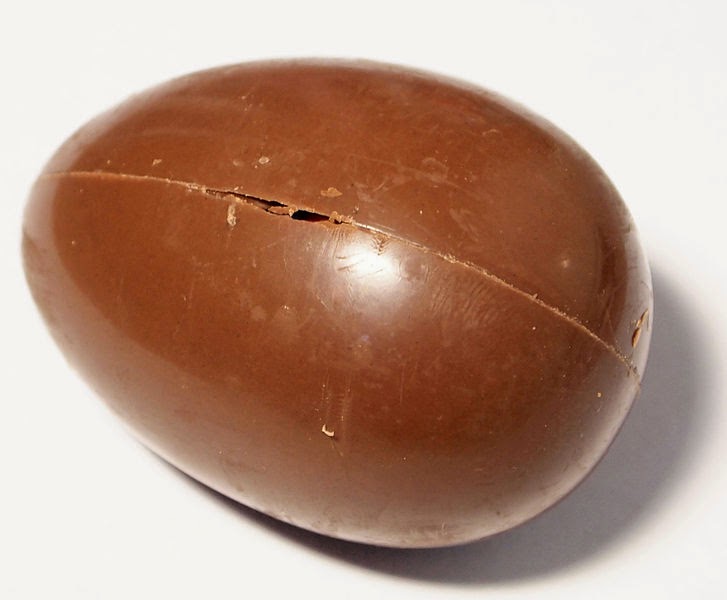
Our dark chocolate Easter egg...soo delicious!


Have a wonderful Easter!

Tom