Mostrando entradas con la etiqueta grana. Mostrar todas las entradas

sábado, 24 de mayo de 2014

La storia del Grana Padano

Marchiatura del Grana Padano
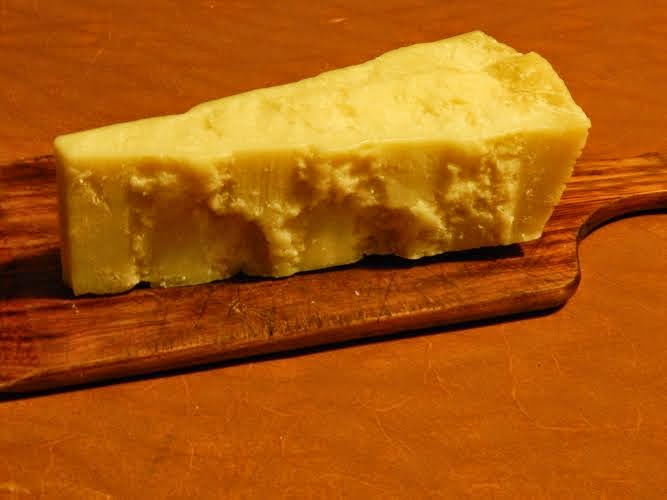
Quando si pensa ai formaggi a pasta dura italiani si pensa sempre a quello che per gli italiani viene considerato il re dei formaggi: il Parmigiano Reggiano. Eppure esistono anche altre varietà deliziose di formaggi a pasta dura, come ad esempio quello di cui vi parleremo oggi: il Grana Padano.

Si tratta di un prodotto protetto dal marchio DOP (Denominazione di Origine Protetta) e realizzato soprattutto in Lombardia, ma anche in Emilia-Romagna, Piemonte, Veneto e Trentino-Alto Adige.
Il Grana Padano è un formaggio vaccino che si differenzia leggermente per la tecnica di produzione dal Parmigiano Reggiano. Ad esempio, il fatto che il latte nel Parmigiano venga lasciato per 15 ore nelle vasche mentre il latte del Grana Padano venga lavorato dopo poco tempo fa sì che quest'ultimo abbia meno grassi. Il Parmigiano viene realizzato alimentando le mucche con foraggi secchi, mentre il Grana Padano consente anche l'alimentazione delle mucche con cereali stoccati nei silos, cosa che rende il sapore del Grana un po' meno ricco forse di sfumature vegetali rispetto al Parmigiano. In media, inoltre, il Parmigiano invecchia più del Grana Padano.

La differenza nella consistenza è poi data dal fatto che il Grana è un po' più compatto e denso, mentre il Parmigiano si presenta un po' più secco per via del maggior tempo di stagionatura e l'interno è meno compatto e più strutturato in scaglie.

Parmigiano Reggiano in stagionatura
 
La sua storia è parecchio antica e ci sono come in molti casi differenti versioni.
Dopo l'anno Mille, ci fu una grande rinascita monastica in tutta Europa, e nuovi monasteri ed abbazie nacquero in tutto il Vecchio Continente. Questi monasteri vivevano della coltivazione delle terre, ed i monaci avevano elaborato tecniche avanzatissime per controllare le acque e bonificare e rendere coltivabili i territori acquitrinosi e paludosi come era la Pianura Padana. In tutto il nord del Paese dunque i monaci pazientemente riuscirono, con la tecnica delle marcite, a bonificare vastissime aree, e questo rese abbondante la quantità del frumento. Questo permise una grande espansione nella disponibilità dei bovini e quindi un grande eccesso di latte. Si decise dunque di creare con questa grande quantità di latte in eccesso un formaggio a lunga conservazione.

Grana Padano

Secondo taluni, il primo formaggio di grana prodotto sarebbe stato il Lodigiano, detto anche Granone. Il Lodigiano era un formaggio assai particolare, con un sapore piccante e leggere venature blu. particolare era anche una sorta di "goccia" che si creava durante la stagionatura. Purtroppo la produzione di nquesto antichissimo formaggio cessò negli anni Settanta a causa dell'industrializzazione nella produzione, e si riavviò un progetto di recupero nella produzione di questo tipo di formaggio solo nei primi anni Duemila.

Il Granone, detto anche Lodigiano

Il formaggio prodotto oggi e venduto come Granone è in ogni caso diverso dall'originale, e questo rende difficili studi e comparazioni. Certo è che anch'esso è comunque delizioso e ha un sapore più amaro ma anche più profondo del classico Grana Padano, e dunque ve lo consigliamo con entusiasmo.
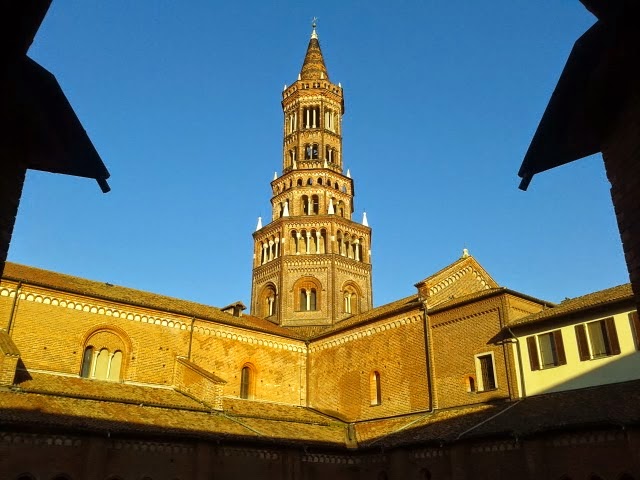
La torre Ciribiciaccola, simbolo di Chiaravalle
Il Grana Padano propriamente detto, invece, si dice che sia nato a Milano, nella (stupenda) abbazia gotica di Chiaravalle, nelle campagne a pochi km dal centro cittadino. All'ombra della "Ciribiciaccola", lo slanciato campanile simbolo dell'antico borgo di Chiaravalle, i monaci avrebbero deciso di creare con l'abbondante latte un formaggio a pasta dura e a lunga stagionatura, cotto nelle caldaie dell'abbazia, i primi caseifici. Abbiamo anche una data di nascita, era il remotissimo anno 1135: si tratta quindi di uno dei più antichi formaggi d'Europa ancora in produzione. I monaci chiamavano questo formaggio Caseus Vetus, un nome impronunciabile per i poveri contadini dell'epoca.

Per via della consistenza compatta e granulosa, questo formaggio venne dunque ribattezzato formaggio di Grana. Oltre al già citato formaggio di Grana di Lodi, o Lodigiano, e il Milanese, o Grana Padano, ebbe un grande successo anche il formaggio di Grana della città di Parma, o Parmigiano. Di questa eccellenza straordinaria della cucina italiana ne parleremo estesamente in un'altra occasione, in questa sede ci basta solo dire come nel corso del XII secolo la tecnica del Grana Padano raggiunse l'area Emiliana e lì la tecnica fu perfezionata per consentire lo sviluppo del re dei formaggi italiani. Nonostante l'antichità e la nobiltà data dall'essere il genitore del Parmigiano, il Grana Padano restò una delizia locale e abbastanza ignorata nel panorama gastronomico Europeo per svariati secoli.

Fu solo nel Secondo Dopoguerra, nel 1951, che attraverso un incontro a Stresa, sul Lago Maggiore, gli operatori caseari stabilirono in una convenzione le differenze e il confine netto da stabilire tra il Parmigiano Reggiano e il Grana Padano, in quell'occasione chiamato "Grana Lodigiano". Le prime normative nazionali in proposito vennero adottate nel 1955, e permisero la riconoscibilità anche internazionale del marchio, e il Grana Padano ottenne nel 1996 il marchio DOP da parte dell'Unione Europea.

La pasta più morbida e meno granulosa del Grana Padano lo differenzia in maniera inequivocabile dal suo vicino Emiliano, e lo rende ideale per un consumo anche fuori dai pasti o come aperitivo, servito magari con un buon prosecco o un Riesling.

E' un formaggio che viene usato anche per produrre delle scaglie sottilissime di formaggio, la cosiddetta raspadura.
E' un prodotto di eccellenza straordinario e dal sapore unico, pensate che per ogni chilo di formaggio prodotto sono necessari ben 15 litri di latte! E ogni forma di Grana va dai 24 ai 40 kg...
Il Grana deve essere lasciato stagionare per almeno 9 mesi, mentre i Grana più raffinati possono raggiungere e superare anche i 20 mesi di stagionatura.

Detto questo, non vi resta che andare alla ricerca di un ottimo Grana Padano DOP e di scegliere voi come volete mangiarlo, se gratugiato su spaghetti (consigliamo la pasta di Gragnano), in dadini oppure nella tradizionale forma di degustazione della raspadura!

La raspadura di Grana Padano

Un saluto!

Tom

The history of Grana Padano cheese

Marking the Grana Padano
When you think about Italian hard cheeses, you probably will think about what Italian calls the King of Cheeses, the Parmigiano Reggiano. But beside this kind of cheese exists also another cheese: the Grana Padano.

It a gastronomical product protected by the quality label DOP (Denominazione di Origine Protetta) and it is very typical of northern Italian regions like Lombardy but also Emilia-Romagna, Piedmont, Veneto, Trentino - Alto Adige. The differences between the Grana and the Parmigiano are mainly that the first is usually lightier than the latter, that has more fats.
The Parmigiano Reggiano also have a longer period of ripening.


Parmigiano Reggiano ripening

Furthermore, the Grana appears to be more compact and dense, while the Parmigiano, because of the longer ripening period, is dryer and looks somewhat more flaky. Its history is quite ancient and there are lots of different versions of the origins of this delicious cheese.
Let's start! After the Year 1000, which everyone feared would be the the last one, there was a huge monastical renaissance all over Europe. Those monasteries lived of farming and developed a superior knowledge in the cultivation of lands. They were also capable of reclaim the swamp lands in the Pianura Padana, the alluvional plain in northern Italy. In every corner of the northern part of the country so moks patiently worked decade after decade to make of this plain a rich agricultural land. And, as everyone can see nowadays, they succeed! With the innovative technique of the marcite, they succeed in controlling the excess of water in the plain, allowing the farmers to obtain a surplus of corn to feed the cows they breeded. This lead to an excess of milk, and this posed a problem: how can they conserve it properly? They decided to create a cheese to conserve it easily.

The Grana Padano
 
According to some, the first Grana cheese would have been the Lodigiano, also said the Granone. The Lodigiano, that takes its name from the medieval city of Lodi, some 30 km south east of Milan, was a peculiar cheese, with a spicy flavour and light blue veins running through it. A sort of tear used to drop from it when it was cut. Unluckily, the production of this ancient cheese stopped in the 1970s, and only after the 2000s the production was restarted. This new Granone, even if it may be different from the ancient one (we cannot compare them) is anyway very, very good!

The Granone cheese, also called Lodigiano

The "Ciribiciaccola" belfry, symbol of Chiaravalle
As for the Grana Padano, we know the full history pretty well and in details. It was born in Milan, in the (gorgeous) gothic abbey of Chiaravalle, just few kilometers away from the bustling city center. In the shadows of the "Ciribiciaccola", the nickname that the inhabitants of Chiaravalle uses to describe the tall belfry, the monks decided to use the excess of milk in a long ripening hard cheese, cooked in the boiler of the abbey. We have also a year of birth, the 1135, that makes of the Grana Padano one of the oldest cheese still in production. Monks called it Caseus Vetus, in latin, a language that many farmers did not know. They used instead the word Grana for it, because of its dense yet granulous texture. Beside the Grana of Lodi, that we've already mentioned previously, and the Milanese, or Grana Padano, also another Grana had a great success: the Grana cheese from the city of Parma, or Parmigiano. We'll talk of this extraordinary excellence of italian gastronomy in another occasion, in this post we'll just add that in the XII century the Grana cheese reached the Emilia Romagna region and there the technique was developed further, with the creation of the Parmigiano Reggiano. But unlikely the most famous son, the Grana Padano remained a local cheese until recent years. It was only after the II World War, in 1951, that in a meeting in the city of Stresa, on the Lago Maggiore, cheese expert from all Europe established the differences and the peculiarity that divided the Grana Padano and the Parmigiano Reggiano, or the Grana Lodigiano, as it was called in that occasion. The first normatives were established in 1955, and they led the international recognozability of the Grana Padano cheese. In 1996, the Grana also obtained the DOP label by the EU.
The texture of Grana is softer and less granulous that the Parmigiano, and makes it ideal as an appetizer or antipasto. If you want it as an aperitivo, eat it with bubbles! We would suggest you to drink a Prosecco sparkling wine with the Grana Padano. Another way of eating it is the so called "raspadura", very typical of Lodi, but also in Pavia or Cremona. Just scrape off the upper part of your Grana with a particular knife, and you'll obtain a thin layer of Grana Padano, so delicate and tasty. This would be impossible to obtain with a Parmigiano Reggiano.

It is impressive to think that you need 15 liters of milk to obtain just a kilogram of Grana Padano cheese, and every wheel of Grana weights from 24 to 40 kgs!
The Grana Padano must be left ripening from 9 to 20 months.
Well, that's it! Next step is to go out finding your wheel of Grana Padano DOP (always choose the original, do not trust Parmesan or so, they're just low quality tacky imitations!)
Eat it as you want, grated on your spaghetti (we always suggest the pasta from Gragnano), in little cubes or in the traditional raspadura way!

The raspadura from Grana Padano


Enjoy your life, enjoy it with cheeses!

Tom